A Finno-Ugric world tour: Narva
By Gage “Touko” Keränen
The moment I arrived in Narva, the easternmost city of Estonia, I felt that I was in a place quite unlike the others I had seen. Soviet architecture was prominent throughout the city and I scarcely heard anyone speaking Estonian. The reason why became apparent when I took a stroll to the Narva River and found myself looking across, into Russia.
Narva, Estonia is famously known for being the city with the highest concentration of Russian speakers, at 97 percent of the local population. While Narva is often stereotyped as a “Russian city,” things are not quite as they seem. One only needs to look closer to see the region’s Finno-Ugric roots.
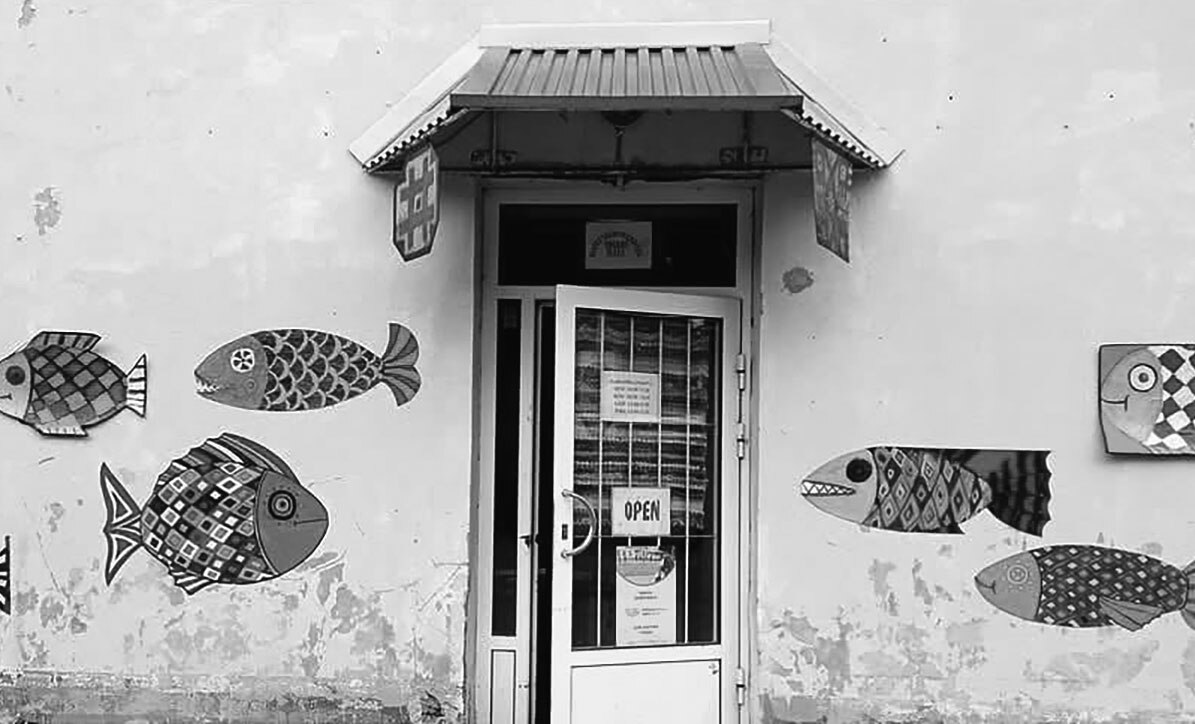
In 2025, Narva was declared as the Finno-Ugric Capital of Culture, and the host of the festival was Ingerimaja, or “Ingria House ” in English (seen in photo accompanying this article), a cultural center for all people with Finno-Ugric roots, specifically the local Votic, Izhorian, and Ingrian people. Finno-Ugric peoples have a long history in Narva and, thanks to modern archaeology, we now know that this northeastern region of Estonia once hosted many Votic villages. To find out more about Ingerimaja, I stopped by the cultural center to meet Ekaterina Kuznetsova, the director and program coordinator. Ingerimaja’s story began in Russia where Kuznetsova was a founding member of a Votic cultural association in St. Petersburg and illustrated the first books ever written in the language. After moving to Narva, she created Ingerimaja with a very specific purpose: to provide a cultural home to the local Finno-Ugric peoples and dispel the myth that Narva is a “Russian city.”
“I want to show that it’s not true that it’s a Russian region,” Kuznetsova explained. “It’s only the Russian language and the people who speak this language have Finno-Ugric roots.”
Kuznetsova is Votic and her family are from a village near the Gulf of Finland — a village which is now on the Russian side of the border. This region is referred
to as Ingria and spans from northeastern Estonia into the Leningrad oblast of Russia. Ingria is the homeland of the Votic and Izhorian people.
After generations of assimilation, it is estimated that about 20 people speak the Votic language today. Their language has largely been replaced by Russian, as the surviving Votic villages are within modern day Russia. This is true also for many Izhorian and Ingrian people, who now speak Russian and were not raised with their ancestral languages.
However, even if there are only 20 speakers of the language, this doesn’t mean that there are quite so few Votic people, as Kuznetsova told me, “ it’s not the language that makes someone Votic, it is the culture.”
After years of working to bring visibility to her language and culture, Kuznetsova has seen the number of people who call themselves Votic multiply. Over time, the sense of shame that caused many people to hide their identity has
given way to pride and today more than 100 people in Russia report that they are Votic.
“It is very important, because I want to make a revival of our culture and our languages. It’s a pity that I can’t do this in Russia — in our villages — and in St. Petersburg,” Kuznetsova said.
Linguistically, Votic is a Finno-Ugric language and is the closest language to Estonian having been influenced by Finnish, Russian, and Ingrian. Due to this close relation, the language is known for being comprehensible for both Finns and Estonians.
Kuznetsova pursued learning Votic as an adult and is still learning today, although being unable to visit the villages on the other side of the border makes it challenging to practice and stay in contact with speakers.
As a solution, Ingerimaja started a YouTube channel called Vadjamaa, meaning “Votic Land,” which teaches about the language, foods, and music of Votic
people. The channel has been an invaluable resource for language learners. There are some young people who can now speak Votic, and this is a spark of hope for the future of the language. Kuznetsova herself is teaching her daughter and, in Finland, there is a Votic man who raised his daughter completely in the language.
The success of Ingerimaja sends a strong message to the world, which Kuznetsova sums up well in her own words. “We are still here.” Ingerimaja welcomes visitors from all over the world and you can find more information on their website: www.ingerimaja.com/en.
You won’t want to miss this year’s Finno-Ugric festival in Hancock, Michigan! If you’d like to learn more or plan your trip, I welcome you to visit FinlandiaFoundation.org / Hancock2026. See you there! Nähdään pian!