By Liisa Hale
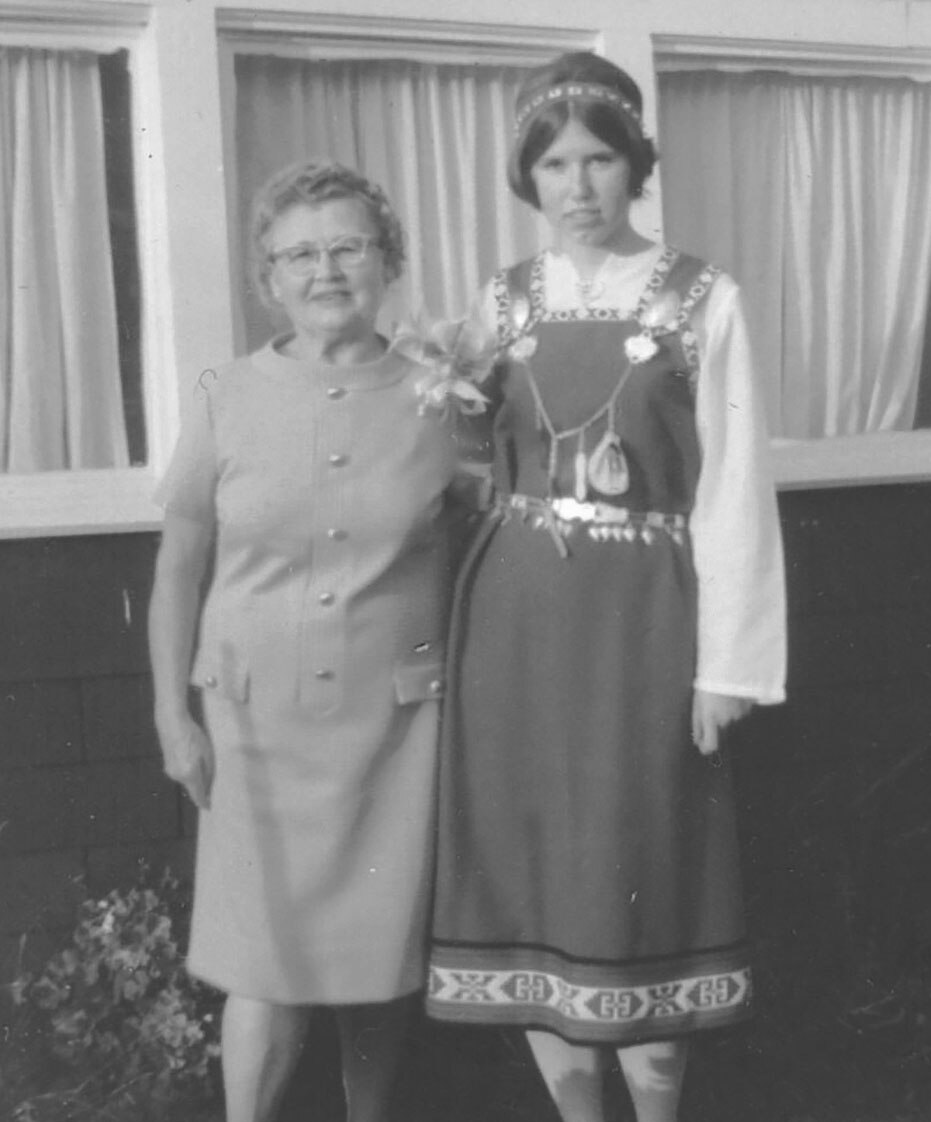
At the age of 16 I was designated my Grandma Aino’s traveling companion for a trip to Finland. She was getting a little older and wanted someone to help her with her (gigantic) suitcase and of course she was also happy to be able to show off one of her beloved grandchildren to her relatives there. The Berkeley Finnish Hall (at that time United Kaleva Brothers & Sisters Lodge #21), where Grandma spent hours every week, was sponsoring a charter flight from Oakland to Helsinki. The trip would last six weeks, and Grandma was eager to visit the remaining friends and family she had in Finland. She had emigrated in 1920 and been back once to visit in 1953. She was among the youngest of 12 children but what with wars and hard lives, the only remnants of her generation were two in-laws. But she had nieces and nephews and friends galore and wanted to see them again.
I was a provincial California girl. My family had traveled across the U.S. and Canada several times, visiting various relatives, but their living situations and styles were not that different from our own. We had hosted a German exchange student a year previous, but tended to think when she did things differently it was because she was wrong; we were not even aware of such a thing as a cultural difference. I spoke no Finnish other than a few numbers and words like Kiitos. (As everyone plied me with food on the trip, I quickly learned also to say Ei Kiitos!)
My trip to Finland was a huge eye-opener for me about different ways people might live that were not the same as mine!
New experiences came fast. First, my first flight. Then we took a taxi to town from the Helsinki airport, another first for me. Kaarina, Grandma’s niece who met us, lived in an apartment in the Hakaniemi district with her husband and grown daughter; their entire apartment would have fit several times over into my parent’s middle-class home. The kitchen only had room for one person. I had never known anyone older than 25 to live in an apartment, much less a whole family living in such a cozy one. My first night in Finland was spent sharing a lumpy sofabed with Grandma, with the windows closed, despite the heat, because of the urban street noise.
The next morning Kaarina’s husband who only spoke Finnish took me to send a telegram to let my family know we were safely arrived – I’d never done that before either, but knew from books to put in the STOPs! I was astonished to find how lively the neighborhood was right outside their door – small shops all along the sidewalk, and people walking and catching the frequent trams and buses. This wasn’t like California where you needed a car to get anywhere, and where only children, the poor, or the elderly rode buses. The harbor inlet of Eläintarhanlahti was just a few blocks away and became my favorite place to sit and read and watch the activity. (Because I didn’t have a map of Helsinki, it was decades before I realized that this body of water wasn’t really a lake, but an inlet from the sea – which explained all the boats anchored there.) We went that night to a free concert nearby presented by the Soviet Navy band. Another shocker for me, a child of the cold war – those young people looked pretty much just like my own friends, not like the evil ogres we’d been taught to think the Soviets were!
We left the city by train the next day for Juhannus weekend in the small town of Kuusankoski where Grandma grew up. Grandma was a bit embarrassed for me to see the drunks lying around near various public buildings, explaining that they were over-indulging for the holiday. I’d never really known about Juhannus despite attending various affairs at the Finn Hall with Grandma. The Hall was in the city, so those Finnish Americans with country homes, or good friends with country homes, would leave town to celebrate and I’d never experienced it. Grandma’s English was rudimentary and heavily accented, so sometimes I had trouble following her explanations of these things but I got the gist that it was a big festival that the entire country celebrated.
Kuusankoski was a small town to begin with, and Grandma’s sister-in-law Sirkka actually lived on its outskirts right by the woods. While she had fairly near neighbors, the lots were large and it was the first time I’d ever stayed in a permanent home with only an outhouse (as opposed to a summer cabin or campground). It was of course clean and well-kept, but the other surprise was the toilet paper which resembled the squares of waxed paper used by my school cafeteria to serve cinnamon buns. I came to learn that this paper was available for free from the paper mill in this company town, so it’s what everyone used despite its lack of absorbency!
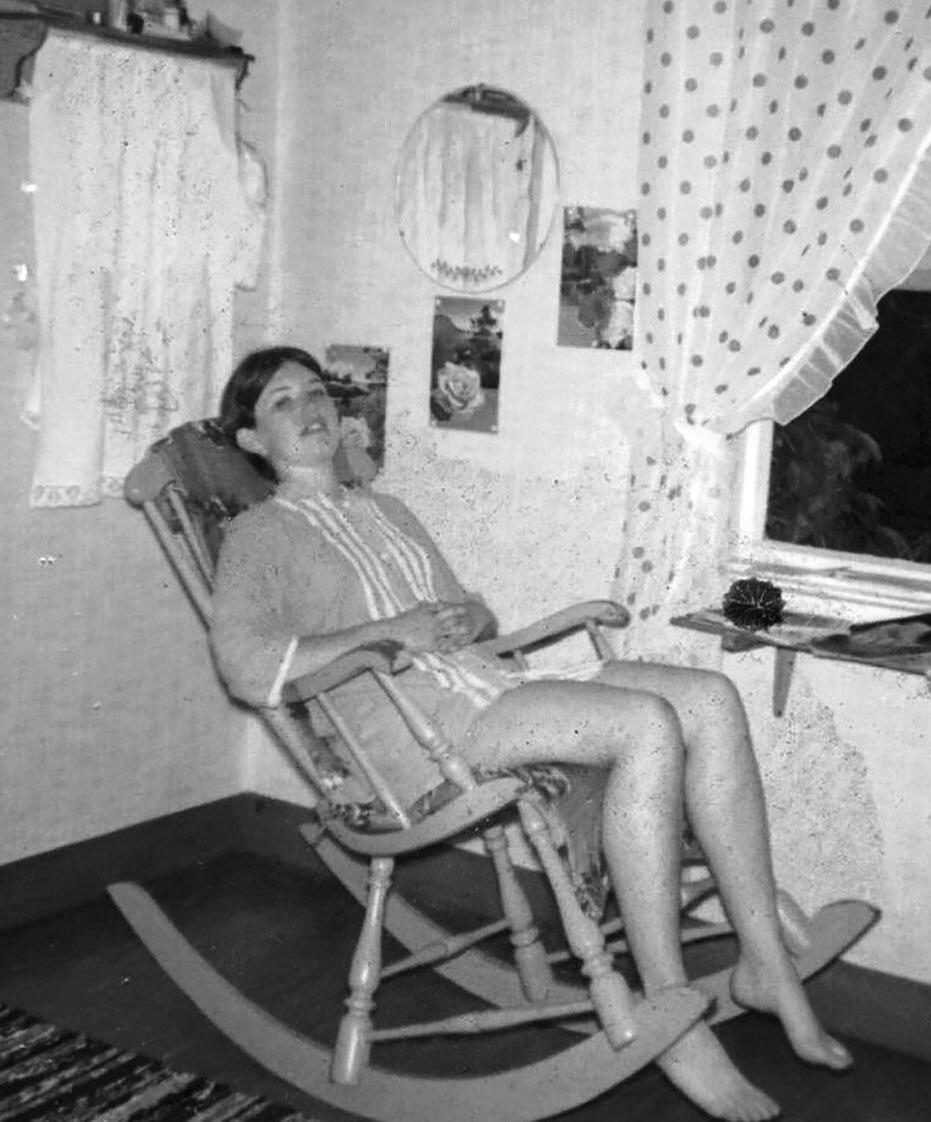
Sirkka spoke no English at all, but she and I became great friends over the three weeks or so that we stayed with her. She was one of those spunkily older women who was totally comfortable with who she was, always up for adventure, and willing to persist and play charades until I understood her. She usually rode a bicycle to get where she needed to go; I had rarely seen a grown-up, much less an old lady, riding a bike at home, where most errands required a car to travel some miles. I learned from her how to get to town on the bus or bicycle, where to find the local kioski for a bag of milk (another surprise – milk in bags rather than cartons) or a stamp, how to fetch the mehu syrup in the basement to mix up a drink, or the viili, which was always fermenting from yesterday’s starter. She also taught me how to set up the viili batch for the next day. Grandma taught me how to bathe from the barrel of water in the sauna, which I learned stayed warm for days after the sauna was heated. Sirkka had an electric hotplate but baked in a wood oven, and I watched her plan the baking based on how hot the oven needed to be, starting with the savory cookies that cooked in a hot oven and ending with those items that needed longer, lower-temperature baking. We could walk to the woods at the end of the street for blueberries. And I spent hours sitting in a wonderful rocking chair built by my father’s grandfather.
I had been pen-pals with a second cousin, Ulpu, for some years. I had been puzzled when she wrote that weaving was one of her hobbies – I thought she must have made a translation error, because I had never heard of weaving as a home activity. But on this trip she explained and showed me the loom in the attic and the rag rugs everywhere. In fact my family had been gifted many of these rugs over the years and I had them on my bedroom floor; I’d never realized they were hand-made out of rags.
Like many U.S. families after WWII we sent “care boxes,” big crates full of gently-used outgrown clothes, cans of coffee, bags of sugar, etc. to the struggling relatives several times a year. This American kid always felt a little embarrassed to be sending used clothes to people, but I learned on this trip that they had made a huge difference in morale and quality of life for many folks during those post-war years. And their gratitude was demonstrated by the boxes we sometimes received from Finland containing beautiful handmade craft and art pieces that cost the makers only in the skill and care needed to produce them. Many of these remain family treasures.
Sirkka, Grandma and I did a little sightseeing, notably on a multi-day trip on and near Saimaa Lake, but Grandma was really there to see people. Because I didn’t speak Finnish and Grandma was usually too busy catching up to translate I would get a little impatient with the hours we sat in people’s living rooms having coffee, pulla, cakes and cookies and talking endlessly. I finally made myself learn to drink coffee because it caused such a hubbub when our gracious hosts felt compelled to find something else for me to drink, despite my saying water was fine. Often they came up with sima, which I did develop a taste for. When I used their bathrooms (indoors in the towns) I was surprised to find how shabby they were with modest fixtures and rust-stained sinks when the rest of the home was quite well-kept. I never figured out what that was about; perhaps it was good enough that they functioned.
Another surprise for me in Finland was that so many people didn’t have telephones, especially if they were at all rural. I didn’t know anyone at home without a telephone, even school friends who lived in low-income housing had a home phone. Most of the time when we set out to visit a relative or friend we would simply hope they would be home when we got there. If they weren’t we would proceed to visit someone else, or if we were in a town we might go shopping for a while or get coffee and try again later. The same happened if they tried to catch us at Sirkka’s – we would sometimes return home to find a note that so-and-so was sorry to have missed us. Yet even without warning, I was always amazed at the array of goodies everyone could pull out the minute we walked through the door. Perhaps they knew through the grapevine that we were in the neighborhood and might stop by, but it was truly astonishing to me. My mom usually had one sweet item on hand to accompany an ever-available cup of coffee for drop-in guests, but the pulla-plus-cakes/cookies/sweet rolls was impressive, and still more impressive when visited on a Name Day.
Sirkka’s neighbor had a phone we could borrow if we really needed to call someone. These neighbors also had a television set; one morning in July the neighbor lady came banging on the door saying “Kuu! Kuu!” to tell me the moon walk was happening. We hurried over to her house to watch the momentous event.
I was very frustrated that the Finnish news person was doing simultaneous translation, so I never heard the “One small step for man” speech; Grandma’s translation was not nearly so poetic as the original. It felt very odd to be out of the country for such an American moment, as it had on the Fourth of July. But it was also touching to realize that this drama was being followed so avidly all across the world.
On one of our last days I finally connected with a Helsinki friend who had been an exchange student at my high school a few years prior, and was now in college. He offered to take me out to see the sights in Helsinki. He met me at Kaarina’s apartment and we set off to see notable places like the cathedral and the marketplace. We went to a café for lunch and he asked if I’d like a beer. I had just had my first beer on this trip, and I wanted to show my sophistication so I said sure. He asked if I wanted “a cup or a barrel” and I laughed and said the barrel, of course, thinking it was a joke. The joke was on me, because he brought me quite a large (1 liter?) stein that I worked hard to finish. After lunch we went to see the Olympic stadium and I still remember that tipsy feeling as I navigated the stairs in the Olympic tower!
Finland in 1969 was just emerging from the deep trauma and poverty left by the 1930s-1940s wars, which had arrived before the dust had fully settled from the upheaval of the revolution and civil war years. Of course the U.S. also lived with WWII but much more distantly, and it emerged with a thriving economy. You could almost see the weight carried by the older generations of Finns who had lived those years, compared to the lightness of my generation of Finns. I was lucky to be there when everything was on the cusp – there were still these pockets of people like Sirkka living happily in the ways of the past, but things were tipping towards the future. (On my next visit to Finland, 27 years later, I was astounded by the number of people standing on the streets of Helsinki talking on cell phones!)
When I read my journal from that trip I am a little embarrassed by my youthful impatience with Grandma and my egocentric view of the world, but it’s good for me to remember how much I learned not just about Finland but also how much perspective I gained about other lives in just six weeks. Bored as I was at times, Grandma gave me a rare opportunity to visit many people in their homes and experience their daily lives, expanding my vision far more than any tourist trip would have.