By Paul Niemistö
Author’s note: This is the fifth in a series of articles examining the history of music among Finnish Americans. I will continue to write more of these as long as I keep finding appropriate subjects to research. Please offer ideas for what I can write about in the future.
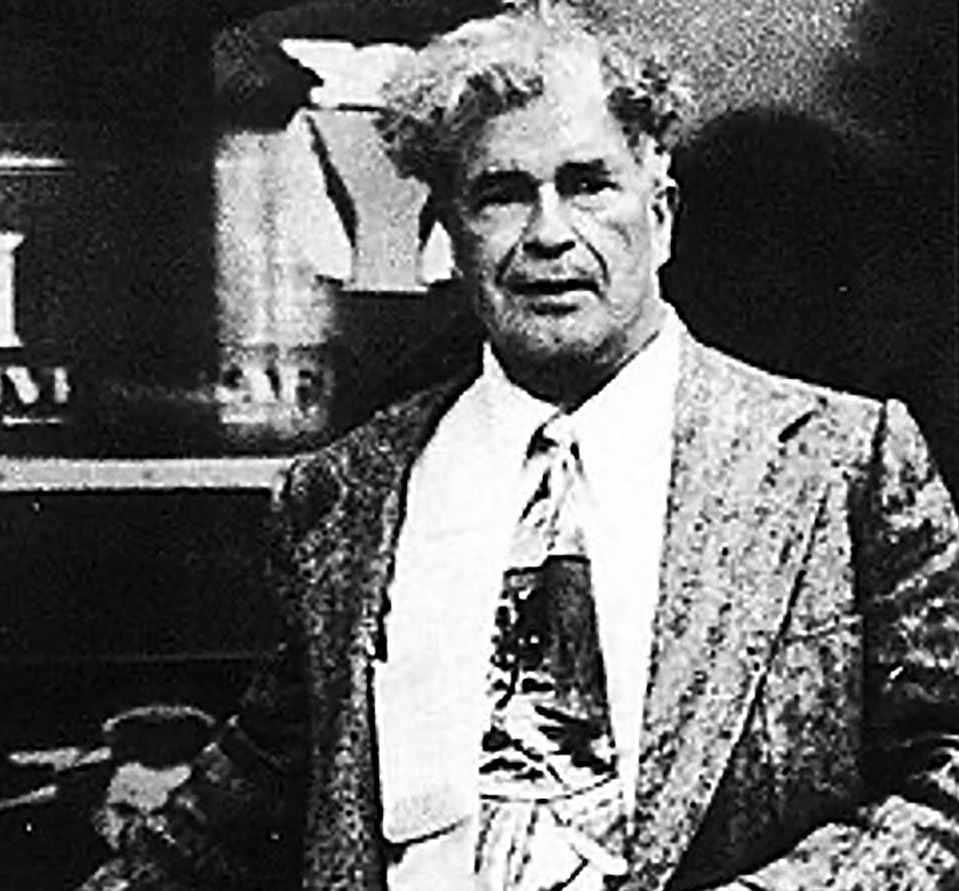
Hiski Salomaa (born Hiskias Möttö; 17 May 1891 – died 7 July 1957 New York) was an immigrant Finn who became famous as a Finnish-American singer, songwriter, and couplet (humorous song) performer whose folk music expressed the hardships and cultural life of Finnish immigrants in the United States. After emigrating from Kangasniemi, Finland, following his mother’s death in 1909, he traveled the normal route via Hanko first to England and then through Ellis Island to the Finnish-American community of South Range, Michigan.
He was a tailor by trade, while writing and performing songs in Finnish and Finglish dialect that resonated with working-class audiences tied to labor movements. Sometimes called the “Finnish Woody Guthrie” because of his socially oriented lyrics on immigrant struggles, Salomaa began recording in 1927 for labels like Columbia, producing numerous singles such as “Tiskarin Polkka” and such verses and tunes that preserved Finnish immigrant heritage amid then scarce native-language records. He was one of the earliest to record.
His distinctive, somewhat nasal vocal style with themes of nostalgia, labor, and freedom made him a pivotal figure in early Finnish-American music, with releases spanning decades and influencing later contributors to Finnish ethnic folk traditions.
My colleague noted that the early recordings were not very polished but were distinctive. He was not a great singer and the technology then was quite primitive.
During his childhood and adolescence, Salomaa grew up immersed in the folk traditions of eastern Finland, particularly the couplet (kupletti) singing style prevalent in Savo province, characterized by rhyming narrative verses often performed at social gatherings and reflecting everyday rural life.
This regional cultural tradition, with an emphasis on oral storytelling and humorous or satirical songs, laid the foundation for his later output, drawing heavily from vernacular Finnish expressions.
While any diaries of Salomaa’s voyage to America remain undiscovered, it is known that Finnish emigrants of this era faced harsh conditions aboard crowded vessels, including disease risks and rudimentary accommodations, with travel durations of two to three weeks. Upon arrival, Salomaa joined the path west, and headed directly to South Range in Michigan’s Upper Peninsula, a region that by 1910 hosted more than 50,000 Finns drawn to lumber camps and copper and iron mines, offering steady if grueling employment for unskilled laborers.
Salomaa established a tailor shop in Hancock between 1909 and 1919, offering his tailoring skills imported from Finland to serve community needs in remote mining towns. Salomaa’s tailoring venture exemplified how individual initiative facilitated survival and eventual stability for many Finns who developed manual trades into small enterprises. Salomaa’s tailor shop grew to employ several seamstresses, thereby generating reliable income amid the economic uncertainties faced by Finnish immigrant women during post-World War I.
This business, operated with his wife Aini Sario, also a tailor, catered primarily to expatriate communities in the area. The couple relocated frequently, residing in Finnish-speaking communities along the Great Lakes, in Rhode Island, and New York.
In his musical world, Salomaa adopted the professional name “Hiski Salomaa” and began performing rhymed couplets (värssyt) in Finnish American communities during the 1920s, drawing on traditional Finnish verse forms to entertain audiences at social spaces and labor halls. These live performances emphasized oral storytelling, often improvising on themes of exile and adaptation.
Soon he was drawn into the new “industry” of immigrant audio recordings. Between 1927 and 1931, Salomaa recorded approximately 18 tracks for Columbia Records in New York studios, capturing his accordion-accompanied vocals in Finnish or “Finglish.” In his recordings, Hiski sometimes added the cornet as an accompaniment.
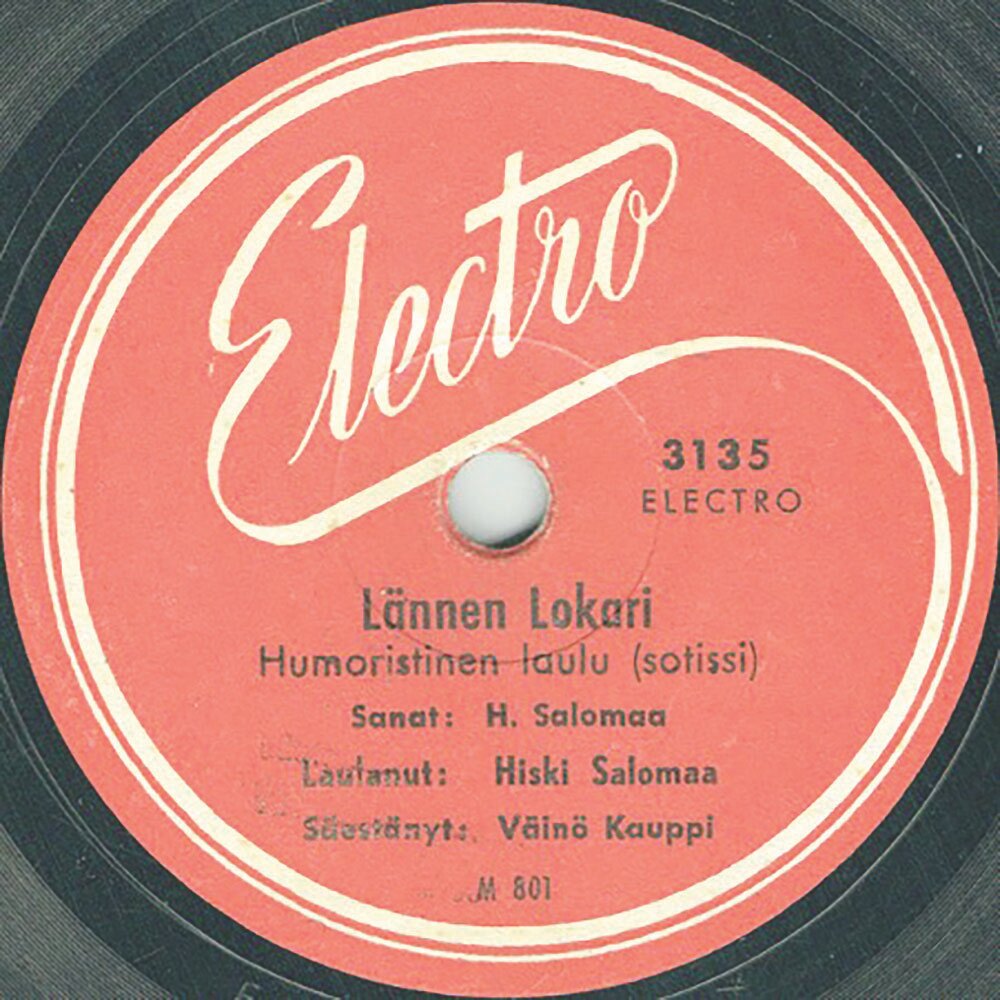
Notable sessions included “Savonpojan Amerikkaan Tulo” (Savo Boy’s Arrival in America) in May 1928, which narrates the perils of transatlantic migration and initial disillusionment with urban prospects. His signature song “Lännen Lokari” (Western Logger), recorded in 1930, humorously details a lumberjack’s amorous escapades amid forest toil, blending bravado with the physical demands of axe work and camp life. Other releases like “Tiskarin Polkka” (Dishwasher’s Polka) evoked the drudgery of menial service jobs, using upbeat polka rhythms to underscore endurance rather than glorify labor.
Salomaa’s songs often portrayed the cases of individual choice in the immigration story—seeking economic autonomy through manual trades like logging, yet confronting isolation and fleeting romances—without romanticizing collective struggle. Tracks such as “Vapauden Kaiho” (Longing for Freedom) reflected yearnings for personal liberty amid Finnish immigrant social constraints, with lyrics decrying military conscription (World War I) and rural stagnation. Posthumously, his cylinders and 78 rpm discs saw reissues starting in the 1970s in LP format, and later with digital compilations like the 2020 album Longing for Freedom aggregating 18 originals, including “Emäntä Pikkonessissä” (Women at the Picnic) for its satirical take on social mismatches. These efforts preserved acoustic fidelity to his early wax cylinder recordings.
Immigration culture historian Juha Niemelä noted: “Hiski’s biggest hit, ‘Lännen lokari,’ caricatures the wanderings of a logger. The lyrics can be found in many songbooks, though they usually contain a few text errors. ‘I’ve been to Piutti (Butte, Montana), Luis (St. Louis), Retulaats (Red Lodge, Montana), and Miaam (Miami),’ sings Hiski. The towns in Montana are found in mining areas where many Finns lived. The ‘Lokari’ wanderer had also visited Frisko, Orekon, and Palmiitsii (Palm Beach).”
Hiski didn’t become known in Finland until the 1950s, when radio host Pekka Tiilikainen played “Lännen lokari” as the theme song for a radio program, until the radio’s station director smashed the record in half and placed it on a brief playing ban. Hiski had become somewhat wealthy during his years in America and toured Finland in ’52–’53 in a fancy American sedan car. In Finland, Hiski is known to have performed only once, in his wife’s hometown of Vehmaa. Several trips were made there and to Hiski’s hometown of Kangasniemi.
Salomaa’s live performances and Finnish and Finglish recordings gained significant popularity among Finnish American enclaves from the 1920s through the 1940s, supported through phonograph records and appearances at ethnic halls that served as cultural hubs for immigrants. By singing about the causal hardships of emigration—such as industrial toil and isolation—as well as homeland nostalgia, Salomaa’s music supported the maintenance of Finnish ethnic identity, particularly among first- and second-generation immigrants navigating American culture.
His output was pioneering, and his Finnish recordings made his output a rare vehicle for sustaining the language and folk traditions in a period when over 300,000 Finns had settled in the U.S. Such recordings, drawing on Library of Congress collections, affirm his contributions to this cultural continuation.
During World War I, Hiski spent less than a year as a conscientious objector in the Calumet (Michigan) prison. Hiski was primarily a supporter of the labor movement, and this ideology is reflected in songs such as “Vapauden kaiho” and “Värssyjä sieltä ja täältä” (which deals with world politics). However, Hiski was willing to perform for audiences of all political persuasions.
Salomaa’s compositions offer a raw, unvarnished portrayal of Finnish immigrant experiences in early 20th-century America, capturing the drudgery of logging camps, transient romances, and personal isolation with a mix of wry humor and stoic realism, as evident in tracks like “Lännen Lokari.” Salomaa was also a member of the Industrial Workers of the World (IWW), connecting his music to radical labor circles.
Critics praise this output for preserving Finnish American dialect and folklore, providing empirical insight into ethnic enclaves during industrialization, though his lyrics’ confinement to Finnish restricted broader dissemination beyond Finnish immigrant communities.
Repeated song patterns, including repetitive melodic structures and sentimental undertones in songs of homeland longing like “Vapauden kaiho,” have drawn criticism for lacking the more formalized sophistication of contemporaneous American folk traditions, reflecting the era’s recording constraints and his amateur training rather than musical shortfall. These elements underscore a “niche appeal,” linked to pre-Depression migrant narratives. Nonetheless, his emphasis on individual perseverance—evident in themes of solitary toil and humorous self-mockery—contrasts with collective-oriented folk protest, aligning more with the personal experience than to any social movement. Comparisons to Woody Guthrie, often invoked in popular accounts for shared working-class motifs, overstate parallels; while Guthrie’s catalog explicitly championed unionism and Dust Bowl inequities through ideological anthems like “This Land Is Your Land,” Salomaa’s output remains apolitical, centering private yearnings and adaptive humor without advocacy for reform or class warfare.
It is difficult to describe Hiski’s music in words but most of the lyrics were well-written, even if some other melodies weren’t quite up to the standard of “Lännen lokari.” There was a cheerful “Savolainen” spirit to his music, along with imitations of women’s speech and a lively, carefree mood. On the one hand, the music reflected the Finnish entertainment of the time; on the other, it evoked the immigrant’s new world and memories, presented in a playful, lighthearted manner. Hiski was a pioneer among his Finnish American popular music contemporaries. It is because of his distinct satirical tunes that he has remained in the Finnish collective memory.