
Jonathan’s Journal
Jonathan Rikkonen
As I once wrote about the many amazing similarities between Minnesota and Finland, and since the Nordic deer hunting season is on the way, it is a proper time to talk about what happened after Minnesota Finns donated red deer to Finland more than 90 years ago.
When after the Great Depression in the early 1930s the Finnish native elk and deer population had been heavily decimated for food, the help came from America. Minnesota Finns donated seven red deer to be planted in Finland and later six more. The latter project became a huge media event with the governor also attending. Today those deer have multiplied into a 120,000-strong population enriching the Finnish natural fauna.
It all started in 1934 when Finnish-American hunters in Virginia, Minnesota, in the Iron Range area, concerned about the situation in their old homeland, decided to send there a new type of deer unknown in Finnish fauna. The initial idea might have come from Finnish consul Eino A. Aaltio in Minneapolis after eating a red deer venison dinner with local hunters.
Many Finns and businesses in the area helped the project with donations. Also called white tailed deer, these antlered animals were moved to similar conditions, to the Nordic land with forests and lakes where they adapted well.
When businessman and paper manufacturing magnate Rafael Haarla heard about the project, he offered a safe harbor for the new deer at his Laukko Manor estate. The beasts were first raised in a fenced ten-acre enclosure where they were protected and fed during the winters. After three years they were released and this was the beginning of a new species population.
At first they were called Virginia deer (in Latin Odocoileus virginianus), but later they were denominated as Laukko deer. Today the official term is white tailed deer even though scientifically they are capricorn. First their population grew slowly, but the addition of six more deer in 1948 widened the narrow gene pool and helped them multiply faster.
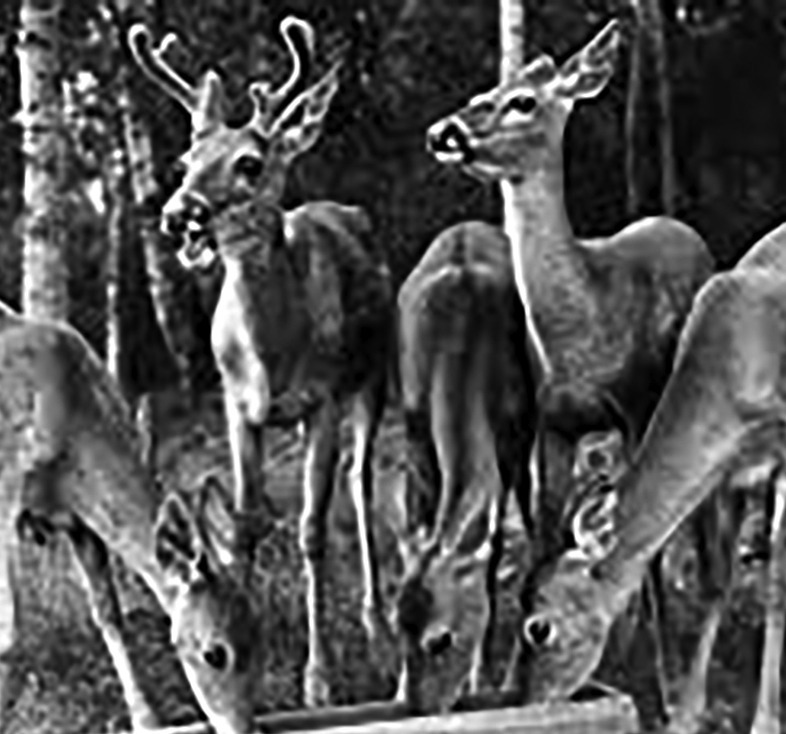
At first in August 1934 seven Virginia deer, born in the Minnesota wilderness, were loaded on a train with two caretakers. In New York they were shifted to a passenger-cargo ship that brought them to Finland. Crossing the Atlantic went well, but in the Baltic Sea there was an uncommonly heavy storm, and two of the three males became badly seasick and later died. Thus, only four young cows and one male survived.
This “lucky guy” created all the early offspring of the Finnish white tailed deer population. The newcomers had also names; the females were called Tilda, Fanny, Jenny and Sokia (Blind in Finnish, since it was realized she could not see). The male was called Uros or literally “Male” in English. At arrival they were only about 4 months old. The first Finnish offspring, two calves came two and a half years later, meanwhile the defenseless blind one was slaughtered by an eagle.
When the Laukko deer were released into freedom, perhaps because a fallen tree had broken the fence, there were about ten of them and afterward the population grew slowly. When it was about 100 strong and the newcomers roamed within 30 miles from the Laukko Manor, concerned about inbreeding from only one initial male, the Finnish Hunting Association chair Heikki Reenpaa traveled to Minnesota in spring 1948 to seek more deer to add to the herd.
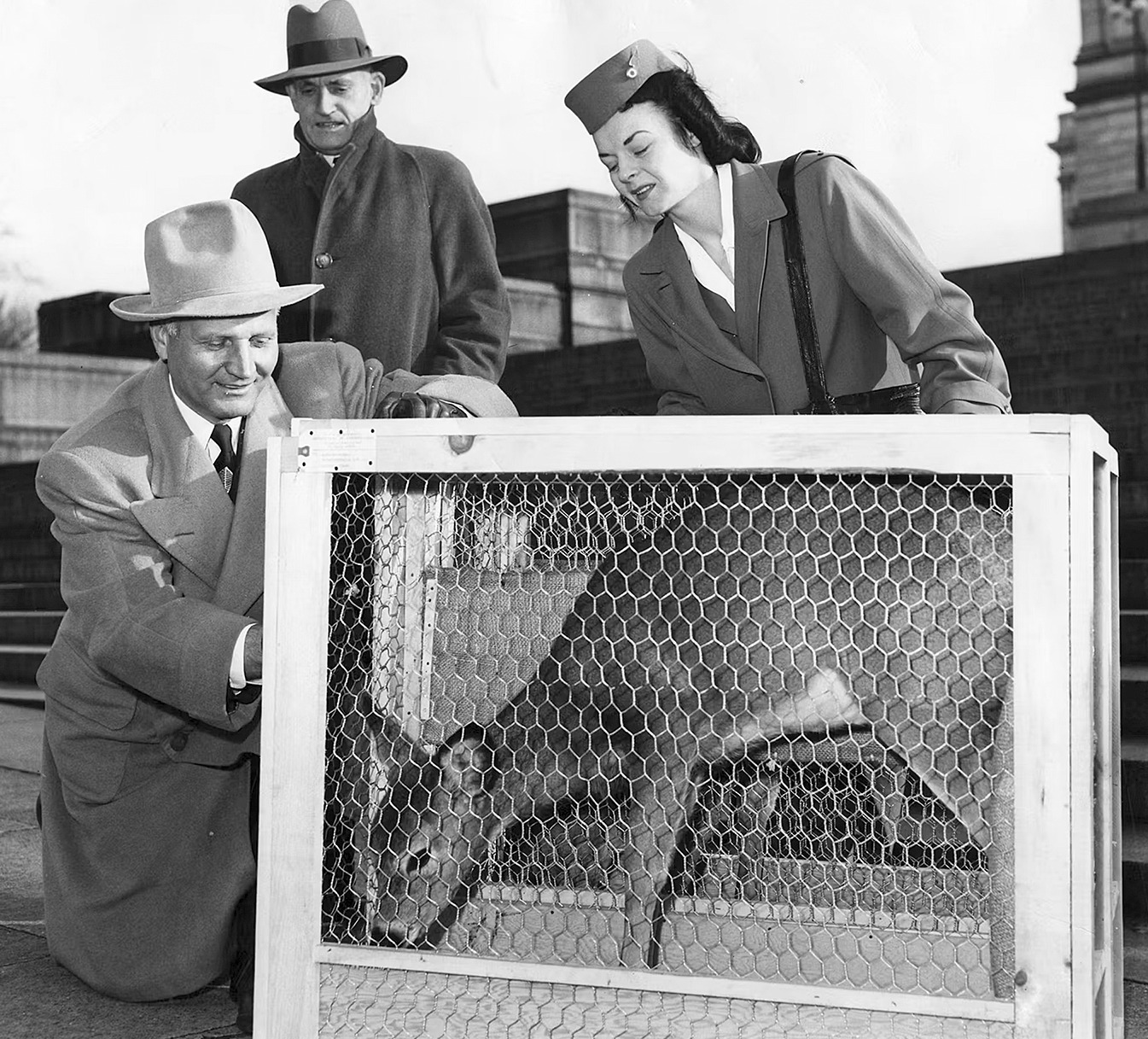
Again, American Finns acted fast. They formed a committee, collected funds and the same year, 14 years after the first ones, they sent six more Virginia deer to Finland, but this time by air. These chosen ones had a trip of a lifetime on a plane, but they arrived in good shape. The Finnish Hunting Museum in Riihimäki has a copy of the Western Union wire where they confirmed arrival of deer in fine condition.
If the first deer sent to Finland were widely noted in the papers on both sides of the pond, the second one was even a bigger photo-op event. In November 1948 at the Minneapolis airport there were Governor of Minnesota Luther Youngdahl and the US secretary of Agriculture and Forestry Frank Blair sending them airborne.
This was a rare occasion when “emigrants” went to this direction.
The new specimen, three males and three females mixed easily with the existing population and soon they were cross-mating and widening the gene pool. Still today, the whole population carries genes of the very first Uros. At first nobody was sure how the deer would survive in the new habitat, the transfer was even called an insane operation, but obviously all went well. According to the latest deer census there are about 120,000 Minnesota-based deer spread within 300 miles in Southern Finland.
But as always, there is another layer in this. Namely these smallish creatures run carelessly and cause dozens of traffic accidents every year. Even the reigning Tango King of Finland, Sauli Lehtonen died in a deer accident in the dark wee hours while returning from his gig. The deer shattered the windshield and hit him fatally.
The other thing is that they cause plenty of harm at special plant farms and gardens by eating and trampling them down. But on the other hand they are hunted for their low-fat venison and also the Finnish dwindling wolf population has more than doubled after the deer spread, since canids prey on them for nutrition. Even they can thank Minnesota for this thoughtful gift.