By Minea Herwitz
When 12-year-old Alpo Franssila said yes to his first cousin's suggestion, he didn't know it would eventually take him from Lapua, Finland all over the world.
His early years didn't indicate such a twist in his story — they were similar to many other Finnish childhoods of the era. Alpo was born on May 8, 1940, in the small old town of Lapua, to a big, conservative Lutheran family in a place both practical and deeply symbolic in Finnish life: the family sauna.
At the time, this was not unusual. In rural Finland, the sauna was often the cleanest and warmest building on the farm, making it a natural place for childbirth. Alpo believes most, if not all, of his siblings were born there too.
Alpo was the youngest of seven children, one sister and the rest brothers, growing up on a modest farm where daily life required hard work, resilience and self-reliance. As with many Finnish families of that era, education was not guaranteed, but it was deeply valued. Although his parents, Aukusti and Matilda Franssila, had little formal schooling themselves, they were determined that their children would have opportunities beyond the farm.
That sisu, and a chance connection across the Atlantic, changed the course of Alpo's life.
A pivotal figure in Alpo's life was his first cousin, Ruth Häkkilä Crane, who had been born in Duluth, Minnesota. When she traveled to Finland to visit relatives in 1952, she suggested something simple but life-altering: that Alpo come to the United States for a visit.
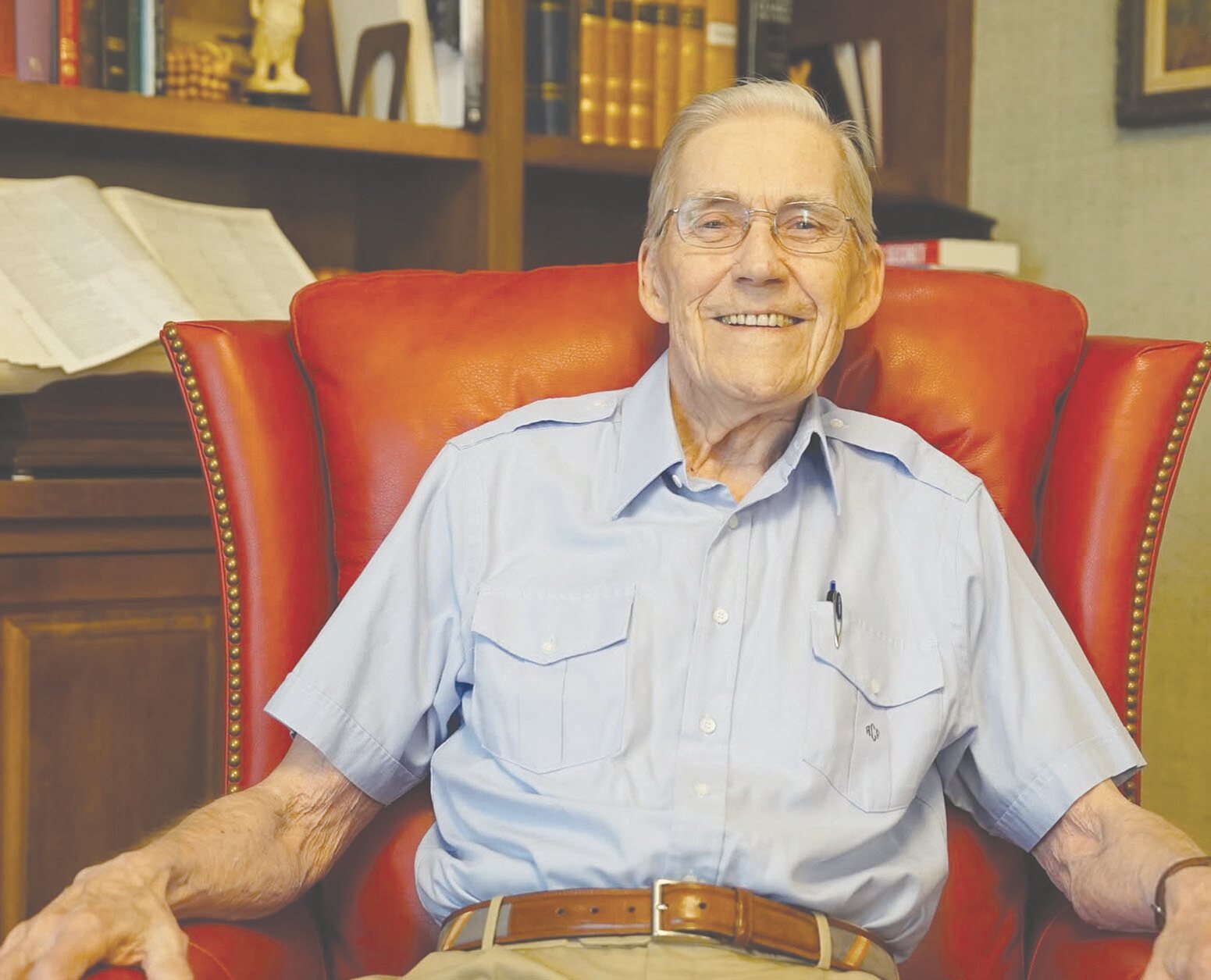
The idea immediately appealed to him.
At the time, life on the farm was demanding, and the opportunity to see America felt expansive and full of possibility. With the permission of his parents, Alpo began the long process of securing a visa while he was finishing up his sixth grade.
In August 1953, at just 13 years old, he boarded a plane in Helsinki — alone.
The journey took 24 hours, with stops in Stockholm, Oslo, Iceland, and Newfoundland before finally arriving in New York. He spoke only two words of English, "yes" and "no" and, as he later joked, didn't really know how to use them.
After a one-day stop in New York, he traveled to Miami Beach, Florida, where the Crane family welcomed him into their home.
A couple of months later, Alpo enrolled at Miami Country Day & Resident School, a boarding school with a large international student population. There, he began the difficult work of learning English while keeping up with his studies. He carried Finnish-English dictionaries from class to class, translating as he went. Slowly, he adapted to American life, not only academically but socially.
He excelled in math, found his footing in sports, and began to build friendships. There were challenges along the way, including one memorable moment when he stood up to a classmate who had been teasing him, but these experiences became part of his adjustment to a new culture. Meanwhile, the Crane family provided steady support, helping fund his education and guide him through an unfamiliar system during his seventh- and eighth-grade years.
As Alpo's ties to the United States deepened, so did the complexity of his immigration status. In 1959, with the consent of his parents in Finland, Ruth and her husband Radford formally adopted him in Miami, and Alpo added Crane to his name.
The intentions were good: helping Alpo remain in the United States and continue his education. However, the visa process became more complicated.
After Miami Country Day School, Alpo attended high school in New Hampshire, but finished up at the Asheville School for Boys in 1960. He graduated as class president there and was then accepted to Duke University for the fall of 1960. After his graduation from Asheville, Alpo traveled to Finland for the summer. He also applied for a student visa to return to attend Duke, but he ran into a major problem.
Because he was adopted by the Crane family in 1959, U.S. immigration authorities determined that he likely intended to stay permanently. As a result, he was no longer eligible for the student visa he had held since October 1953. Without a valid visa, he could not continue his studies in the United States.
The U.S. consular authorities in Helsinki said that he needed a resident visa/green card. Because of the quotas, this would take three to five years to obtain. To secure a study place, Alpo applied and was accepted at the University of Helsinki while waiting for the issue to get resolved.
What followed was a long and complicated process involving multiple layers of government.
The Crane family, friends, and attorneys worked persistently to resolve his case, reaching out to officials and Congress members at the federal level. One friend, Mrs. Molly Danielson, a daughter of a former Texas governor, wrote to Vice President Lyndon B. Johnson regarding the progress on a private bill that was moving through committee to make an exception in Alpo's case and allow him to obtain the resident visa. It finally passed the joint committee, and President John F. Kennedy signed it on May 25, 1961.
Another complicated chapter in Alpo's early adulthood involved military service obligations. According to Alpo's recollection, both Finland and the United States considered him eligible for military service when his citizenship status was in transition. He recalls receiving communication from Finland regarding mandatory military service, while also being subject to the U.S. draft due to his residency status.
He sought clarification from officials and was ultimately able to defer or avoid service through a combination of his changing citizenship status and continued student enrollment. As he later reflected, navigating the expectations of two countries at once was "one mess after another."
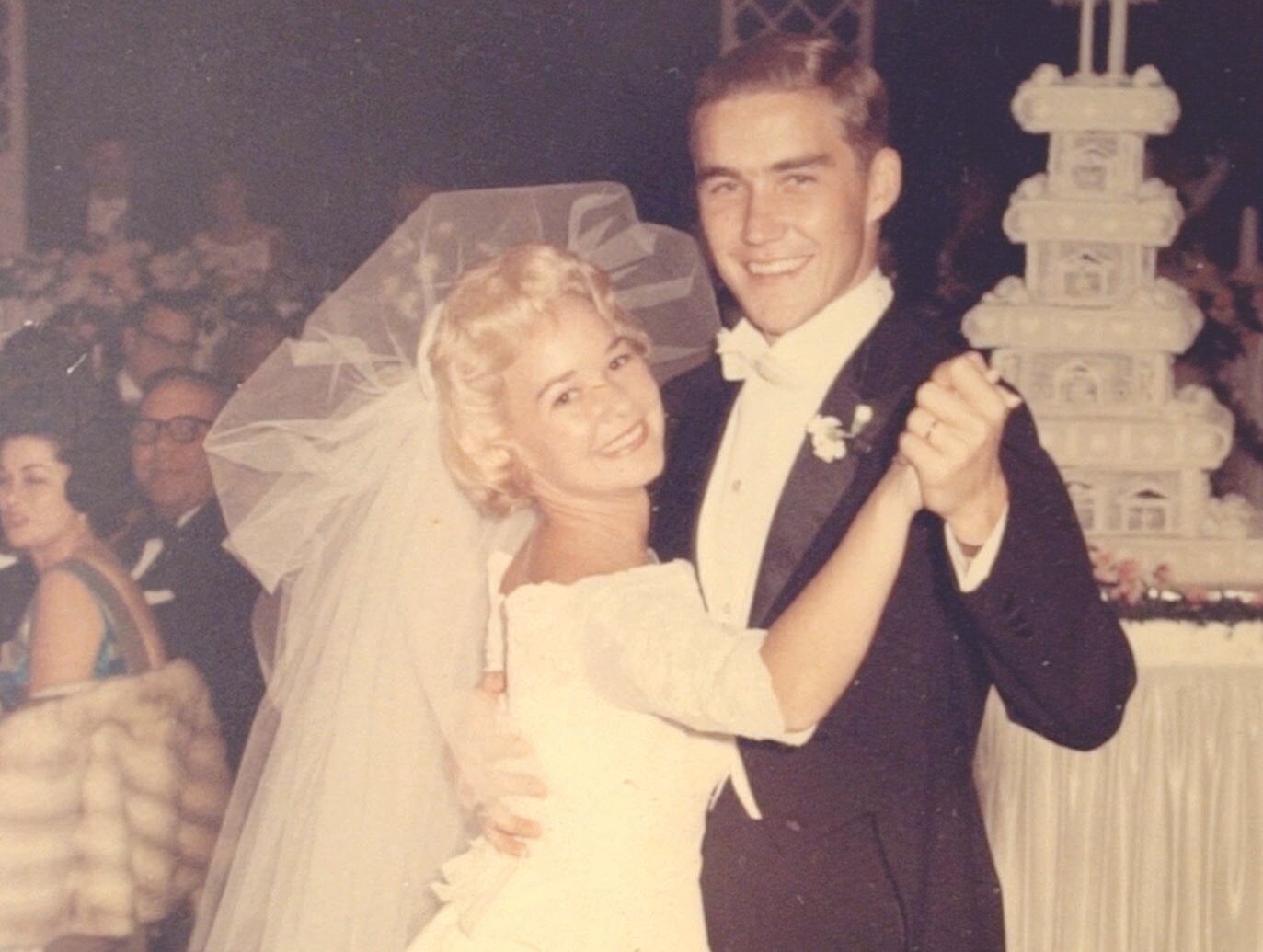
With his visa status resolved and his residency established, Alpo returned to the States in June 1961 to resume his university education, but there was a kink here, too. Duke had not held his place for fall of 1961, and Alpo had to change his plans. He enrolled at the University of North Carolina at Chapel Hill, graduating there in 1964 with a bachelor's degree in international studies. In September 1964, he also got engaged to Marjorie Landon Knight, with whom he later had two children.
Graduating from Chapel Hill was not the end of Alpo's studies. The family headed to Arizona for his business degree in international management, which he obtained two years later in 1966 at the Thunderbird School of Global Management, now part of Arizona State University.
Initially, Alpo had considered a career in the U.S. Foreign Service. However, he was advised that being foreign-born would make that path difficult. Instead, he pursued international business.
After completing his studies, he was hired by Emerson Electric and began working in Ohio, but in order to fully participate in international business, he needed U.S. citizenship. At that time, the process required five years of U.S. residency and six months of residency in the relevant state, which for Alpo was Ohio.
With assistance from a local congressman, his case was expedited, and Alpo became a U.S. citizen in early 1967. Shortly thereafter, with his new U.S. passport in hand, he was sent abroad for the first time, to a trade show in Tripoli, Libya.
Alpo’s work took him across Europe and Asia, including extended periods in Belgium and Japan. While living in Belgium, he and his wife Marjorie welcomed their first daughter, Michelle. Later, in Japan, where they spent approximately two and a half years, son Erik was born.
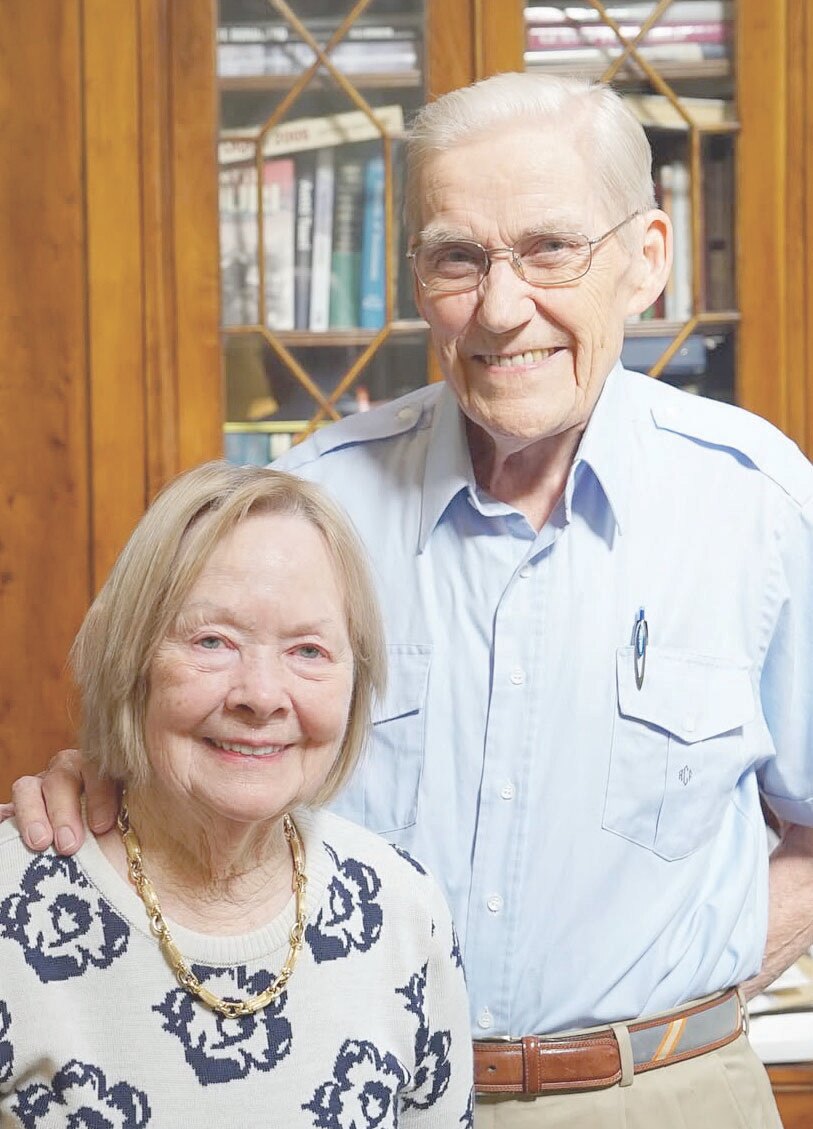
Eventually, the family returned to the United States, and after moving a couple of times, they found their place. First, they spent nine months in Oklahoma with an Emerson subsidiary before moving to North Carolina to take a job in international banking covering Southeast Asia, New Zealand and Australia. Emerson later brought him back, and the family moved to Wisconsin, but returned to Charlotte where they have been since the early ’90s. Eventually, he left corporate life in the ’90s to attend to family investments and became a private investor. Alpo is now semi-retired.
When Alpo became a U.S. citizen in 1967, he was required to renounce his Finnish citizenship, as dual citizenship was not permitted by Finland at the time. Years later, however, Finnish law changed. Through updated policies that allowed individuals to reclaim citizenship based on ancestry, Alpo was able to regain his Finnish citizenship, for both himself and his children.
Today, he is proudly a dual citizen, and declares that he is Finnish-American.
Despite building his life in the United States, Alpo has remained deeply connected to Finland. He has returned to Finland multiple times, including a visit in 2018 with the American Scandinavian Foundation, where he revisited his childhood home in Lapua. Part of the original family property has since been preserved within the family.
He has also maintained Finnish traditions throughout his life — especially sauna. Born in a sauna, he has continued the practice for decades and estimates that he has built or purchased five saunas over the course of his life.
Alpo’s story is not only one of opportunity, but also one of generosity. Over the years, he has supported a number of educational and cultural institutions connected to his life, including his schools and Finnish-American organizations.
Most notably, he made a significant contribution to Finlandia Foundation National’s Saving Finland in America campaign, helping preserve the Finnish American Heritage Center in Hancock, Michigan.
He speaks with quiet conviction about his contributions. Regarding the Heritage Center: he did not want to see it "disappear... everything sold off... never to be put together again." Alpo also expressed that he wanted the materials there to be accessible to his children so they would be "aware" and maintain a connection to their history and culture.
Preserving heritage, he emphasized, is not just about the past: it is about ensuring that future generations remain connected to their roots, too.
Alpo advises those future generations to pay attention to the world, understand global events, stay informed, and recognize how interconnected everything is — politically, economically, and culturally.
In his home office, it’s clear that Alpo still maintains his connection to the wider world. Documents, books, memorabilia, pages and newspapers line the shelves and surfaces.
Alpo Crane’s life has unfolded across borders in ways few could have predicted. And yet, there is a consistent thread: his deep connection to heritage, a willingness to adapt, and a recognition that opportunity carries responsibility.
A boy born in a Finnish sauna grew into a man whose life would span continents, yet he never lost sight of where he began.