By Gage “Touko” Keränen
When you think of Karelia, what comes to mind? Perhaps you think of territory ceded to Russia, or of evacuees moving to various parts of Finland and the US. Maybe it even calls to mind The Kalevala, the Finnish-Karelian epic whose roots lie primarily in Karelia.
Beyond the geopolitical history, fewer know that Karelia has its own unique language and culture. Not only that, but the Karelian language is closely related to Finnish and has become seriously endangered since the year 2000.
To learn more about the situation of the Karelian language and identity today, I spoke to local experts and community members in both Joensuu and Helsinki. What they told me was a story of assimilation, displacement, but also hope, as the next generation begins to reclaim their Karelian roots and give new life to their language.
Modern day Karelia is split between Finland and the Russian Federation, reaching from Eastern Finland to the shores of Lake Onega. Compared to other Finno-Ugric languages in Russia, Karelian is declining very quickly, losing more than half of its speakers since 2002.
The situation is also critical in Finland, where it is estimated that 5,000 people speak Karelian on a daily basis and another 20,000-30,000 can passively understand it or have limited speaking skills. According to Niko Tynnyrinen, a Karelian language teacher at the University of Eastern Finland, this decline in the speaking community comes as the result of displacement and social pressure. As a wave of “Finnishization” swept the country in the early 20th century, many Karelians were advised to change their last names to more Finnish-sounding last names. These changes were motivated by strong anti-Russian sentiment in Finland, through which Karelians would be incorrectly perceived as “too Russian” or as “Russified.”
Name changes also weakened the connection of future generations to Karelian identity, especially if their families stopped speaking Karelian at home.
“Young people often didn’t know they were Karelian until recently,” Tynnyrinen said. “They are waking up to their heritage and responsibility.”
Karelians have sought out these previous names, and some of those who have been successful changed their names back, taking new pride in their roots.
In the language revitalization movement, young Karelians are becoming leaders too, especially those who weren’t raised with the same social pressures as their parents or grandparents.
“The younger generation doesn’t have the group trauma of the older generation with the language,” Tynnyrinen explained. “They are the most active members and organizers at events.”
Supporting the language revitalization movement is Karjalan Sivistysseura (KSS or “Karelian Cultural Society”) in Helsinki and the Karelian studies program at the University of Eastern Finland (UEF) in Joensuu. These two organizations have joined forces to produce new educational materials in the language and to translate books into Karelian, such as the Wizard of Oz.
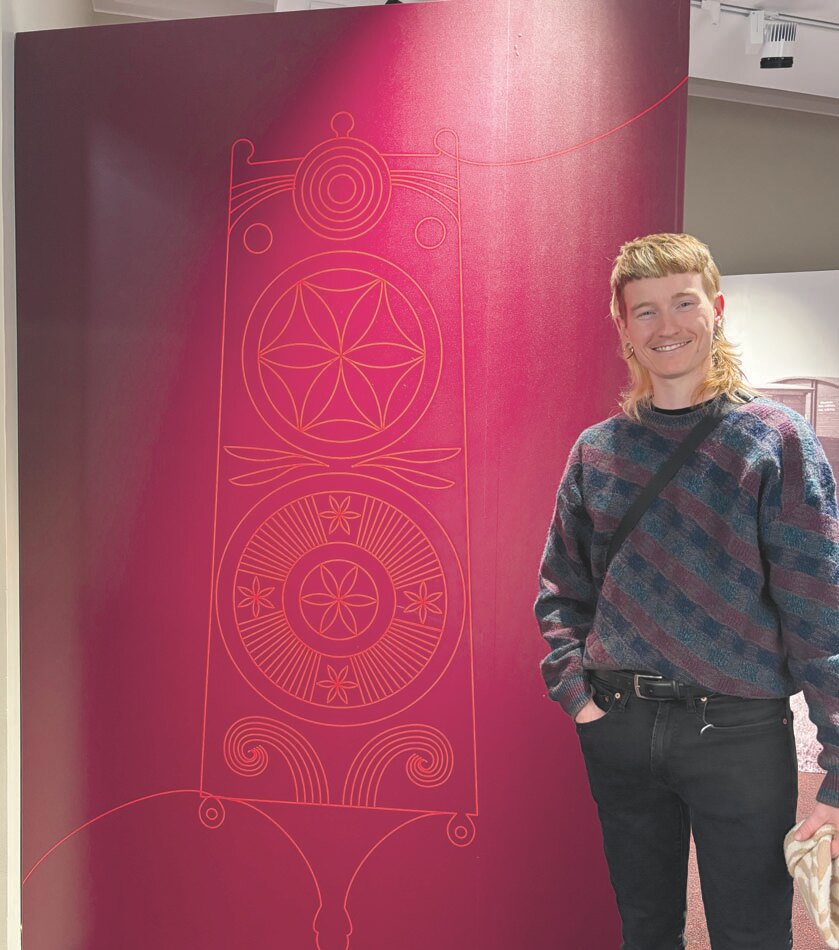
At UEF, students can now take multiple classes to study the Karelian culture, history, and language, being the only university in Finland where a variety of classes are available in this field. The university hosts a growing number of new Karelian speakers, with more than 70 students enrolled in classes today, making Joensuu a magnet for people interested in the language.
Other cities throughout Finland have their own Karelian clubs and some cities have groups for children as well, where activities are organized to teach the language. Some are hopeful that language nests might be a reality in the near future, to provide immersive, early childhood education in Karelian.
Online dictionaries, genealogy resources, digital books, and oral histories are also available through KSS for anyone seeking to get reconnected or to explore the topic.
For those who are seeking to reconnect with their heritage language—whether it is Karelian or something else—Tynnyrinen has a message: “You don’t need to go so hard. Even a little is good. There’s never a downside to learning your old language.”
Interested to learn more about the Karelian language and culture? Read more at Karjalan Sivistysseura: www.karjalansivistysseura.fi/.