By Mirko M. Hall
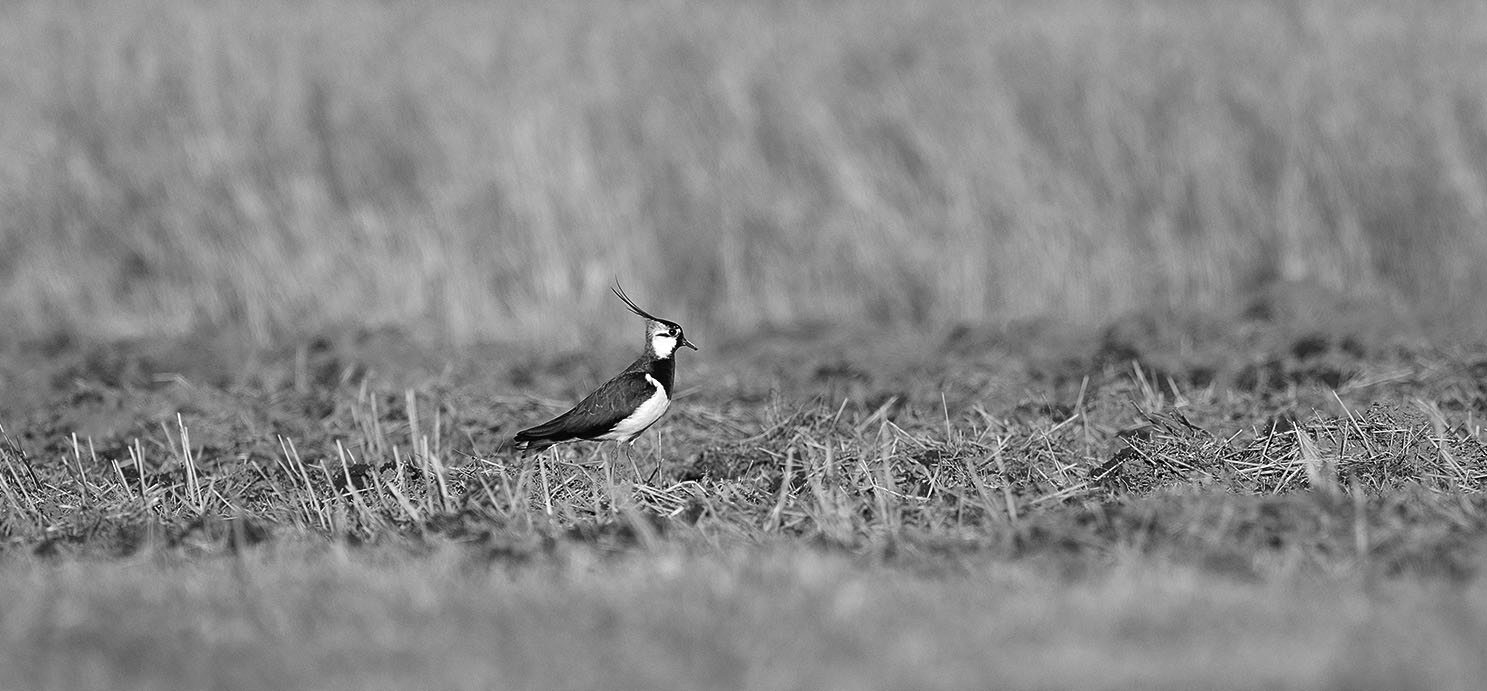
A northern lapwing stands in a frost-browned field, drumming its feet against the frozen ground — a classic ploy to coax worms to the surface. It is one of the oldest tricks in the shorebird playbook, and one of the surest signs that spring has reached Finland.
During Palm Sunday weekend in March 2026, I spent several days birding in Helsinki. I arranged a private tour with Samuel Bloch, the founder of Birdwatching Helsinki. We planned to explore the Viikki-Vanhankaupunginlahti Nature Reserve at 6:30 a.m. I arrived about 30 minutes early and wandered through the fields while waiting for him.
Several northern lapwings (Vanellus vanellus) were already there, walking quietly through the silvered stubble. Every few steps they paused, heads lifted, scanning the field before bending again to feed. They had spent the winter across a broad expanse of Western and Southern Europe. Carried back to Finland on warm southwesterly currents, they were now interested only in feeding.
As the morning sun warmed the field, the male lapwings became active. Rising above the reserve, they twisted, tumbled and wheeled through the air. These erratic display flights are meant to warn off rival males and attract watching females. Broad wings flashed black and white against the spring sky, and a distinct hum rose from their wingbeats. All the while, they emitted a loud, catlike call: “pee-wit, pee-wit.”
It was easy to understand why the lapwing is a beloved harbinger of spring in Finland. Few migratory birds return this early. Lapwings often arrive in February or March, even before winter has fully retreated.
Their return has long been welcomed across the country. In farming communities, generations have linked their arrival to the start of a new growing season. It holds a similar emotional resonance to the arrival of the American robin in parts of the United States.
The lapwing is about the size of a pigeon, but it looks unlike any other European shorebird. Its striking black-and-white plumage has a metallic green and violet iridescence in bright sunlight. A long, wispy black crest sweeps upward from its crown, giving the bird an unmistakable silhouette.
Lapwings are birds of open country. They nest in coastal meadows, open bogs and farmland. In April, they lay their eggs in a shallow scrape on the ground.
This strategy has worked for centuries, but it brings risks today. Modern farming practices destroy nests during spring plowing, and the loss of coastal grazing land compounds the damage. As a result, populations have plummeted across much of Europe.
Finland offers a more hopeful story. While many regional populations continue to struggle, the country still supports an estimated 130,000 to 170,000 breeding pairs — one of the strongest totals remaining.
Viikki-Vanhankaupunginlahti illustrates this success. The 800-plus-acre reserve is situated in the middle of Helsinki and protects one of the most valuable bird sanctuaries on the Gulf of Finland. Here the lapwing has benefited from targeted habitat management.
Longtime birder Hannu Sarvanne has monitored the reserve’s breeding population since 2013. He has documented a count that has varied from 15 to 65 pairs, with numbers climbing in recent years.
The recent increase in breeding pairs stems from the restoration of coastal meadows. Conservationists cleared expanding reedbeds and reintroduced summer grazing. This recreated the short, wet grasslands lapwings need for nesting and foraging.
The reserve also proves that conservation and agriculture can coexist. Farmed for centuries, the fields of the Viikki Research Farm remain an active agricultural landscape that today belongs to the University of Helsinki. But they still provide vital habitat for breeding birds.
It is a reminder that wildlife depends on thoughtful land management just as much as protected wilderness.
Even Bloch, who has guided birders here for several years, stopped to watch. As the lapwings tumbled overhead, it was easy to see why he keeps bringing visitors back.
By the end of the morning, the lapwings were never far from view. Their calls carried across the fields and their restless flight continued above the reserve. Other spring migrants like the Eurasian skylark and the white wagtail caught my eye — but the lapwings defined the season.
I had arrived at Viikki-Vanhankaupunginlahti hoping to see lapwings. After this morning, I understood why. For so many Finns, that drumming, tumbling, calling spectacle is pure spring itself.