By Duane Lahti and Nan Wisherd
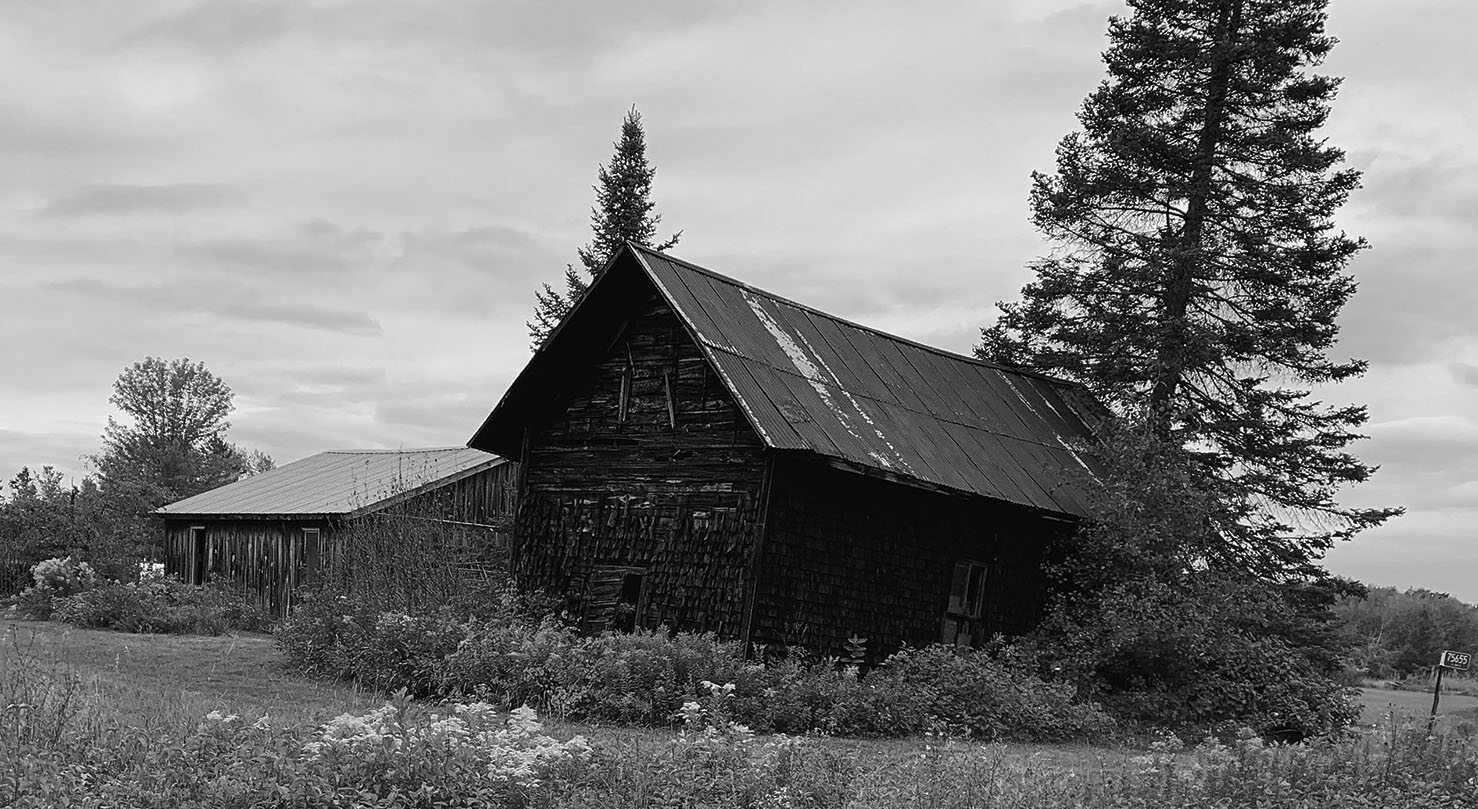
“Running to the grocery store for a few things” is something we all take for granted. The only difficulty in buying a dozen eggs, a carton of milk, or a loaf of bread are the choices we have: White eggs, brown eggs, or cage-free eggs? Skim, one percent, two percent, whole milk, lactose-free, or soy milk? And let’s not even start discussing our bread choices.
During the late 1800s and early 1900s, the earliest settlers of Oulu and Waino in Wisconsin’s northwestern wilderness didn’t enjoy the choices we now have. If they were lucky, they had a few chickens that provided eggs, or a cow they could milk.
If they had any money or something to barter, they could buy a sack of flour and bake some bread – if they had a stove. Abundant wild game, wild berries in the summer, and plenty of fresh water enabled the first settlers to survive while constructing buildings and clearing their land for farming.
The first homesteaders in the Oulu-Waino area traveled several miles through the forest along rough marked trails from the Brule station or from the Northern Pacific railroad stop at Muskeg, halfway between Brule and Iron River. They carried their provisions and tools that they used to clear their land and construct their log saunas, homes, and other outbuildings.
Local folklore relates how six men stopped at the Brule station, unloaded their belongings and a large cookstove, and began trudging over seven miles north, following logging trails to the land where they filed their homestead claims. Filing in Oulu, Bayfield County, were John Maryland and John Kangas while John Lahti, Herman Koski, Jacob Jarvi, and Jacob Koski filed in Waino, Douglas County.
Except for the natural resources and what they had carried, the six hardy Finnish pioneers had nothing but themselves and their sisu to carve new lives for themselves. The men lived together the first winter in a sauna they’d built. The next year, construction began on the other homesteads with the men working together like a construction crew.
As additional settlers arrived, a road of sorts was cut from Brule, which was the closest place for supplies. The road eventually crossed east through Oulu and north to the settlement of Orienta.
During this early settlement period, there were no stores or business places in these remote areas so, in most cases, when a homesteader made the long journey to get supplies, needed supplies for the neighbors were also brought back. N.P. Johnson, an early Waino resident, was known to collect orders from his neighbors.
Next in Oulu were a few small, basic stores within the settlers’ homes. The first store in Oulu was owned by Waino resident Herman Koski. The small grocery store opened in 1904 in Fred Johnson’s Oulu home and was relocated twice before being destroyed by fire. Mr. Koski then opened a new store in Waino, Oulu’s Twin Town.
Shortly after Herman Koski’s store burned, John Nurmi constructed another store in the same location as Koski’s store and operated it for several years until selling it to Hilda Suni. Next, the building was converted into a blacksmith shop operated by Emil Hermanson. It still stands today.
In 1896, Matt Harju opened the first general store in Waino. Located five miles north of Brule at the intersection of what is now County Highway H and the town roads of Koski Road and Tuura Road, the store was part of Waino’s “community center” along with the nearby Beck School, the Finn hall, the Waino Evangelical Lutheran Church, the Eternal Rest Cemetery, and Beck’s Tavern.
Most of the Finnish settlers had small farms and very little money, so eggs and butter were bartered at the stores. The store owners valued a dozen eggs at a dime and 15 cents for a pound of butter, which were shipped by train to distributors in larger cities like Ashland, Duluth and Superior. The store owners often extended credit to the local farmers, too.
Flour was sold in 100-pound sacks; the empty sacks were then used to make underwear. Arbuckles coffee sold for 15 cents a pound.
Lydia Koski Tuura remembered, “The Waino store [Harju’s] wasn’t any supermarket, but it had more variety than the modern drug store. Lanterns, harnesses, and skidding chains hung from the ceiling over barrels of crackers, sugar, bologna, kerosene, and nails. Calico, ribbons, needles, thread, and so much more needed by the people of the area were also available.”
Harju became Waino’s first postmaster in 1900. He moved two years later, and his store/post office was purchased by a group of settlers from the Twin Towns. It was organized as the United Farmers Store Company, and N. P. Johnson was named the store manager and appointed postmaster by the U.S. Postmaster General.
In 1912, Axel Pelto arrived in Oulu and opened a general clothing and grocery store in the Oulu Co-op Creamery operator’s house. He later moved the business into his own home at the current intersection of County Highways B and FF. The store operated until 1939, and the building is still in use as a residence.
As (mostly Finnish) families continued to settle Oulu and Waino, the Twin Towns were able to better support independent grocery stores and other small businesses. Roads were improved for wagons and buggies, and an occasional automobile was seen.
John Ladvala, whose store stood near the intersection of Clevedon Road and County Highway FF in western Waino’s Riverside community, obtained most of his supplies from the Bellwood/Blueberry Depot near the south end of the Clevedon Road between Brule and Maple. Ladvala sold everything from kerosene for lanterns to wagons to field seeds for planting to Russian sardines.
Oscar Niemisto operated a grocery store and post office in Oulu and served residents in the southern part of the township. In far northern Oulu, Henry Getto operated a small grocery store until 1920. As more land was being settled and developed into farmland in the eastern part of the township, Matt Huhtala opened a small store there. Charles Rantala Sr. also operated a small store.
Automobiles changed rural history. Bumping over muddy dirt roads with a horse and buggy slowly evolved into automobile travel, first on smoothed and graveled main roads and eventually on roads that were paved and blacktopped. Blacksmith shops closed, and auto mechanic shops and gas stations opened.
Shopping in small, local stores slowed as larger stores with greater variety were not far away by automobile.
Some of the gas station/grocery store combinations survived, though, in the new automobile era. Oscar and Tynne Lehto operated a store and gas station at the intersection of present-day Highway B and Airport Road in Oulu. It was built in 1928 and was known as Lehto’s Station. It operated for many years until purchased by Jack and Mary Purnell in the 1960s and later by Harry and Leanna Pudas, who operated it as Harry’s Corner Store until it closed in 1991.
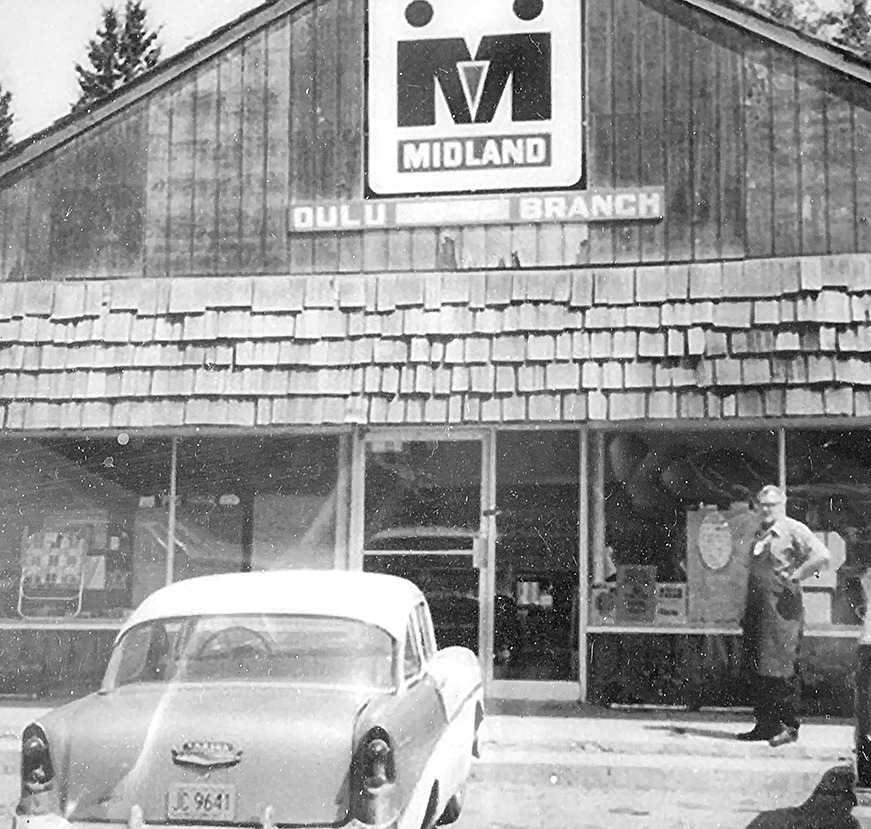
Another factor leading to the demise of the small local grocery store was the Cooperative Movement, the pooling of money by a group to buy larger quantities at cheaper prices. The local Cooperative Movement began on March 14, 1914, when a group of settlers met in Oulu. The meeting resulted in the grand opening of the Iron River Co-op Store on November 11, 1914. Two years later, a branch store opened in Oulu near Axel Pelto’s store.
On July 30, 1917, members of the Iron River Co-op Store joined representatives from other area co-ops at a meeting in Superior, Wisconsin, and formed the powerful CCE (Cooperative Central Exchange). From a very modest beginning with 15 regional co-ops amassing a starting working capital of only $15.50 and a 1917 profit of $268, the CCE grew to include 200 cooperatives through the Upper Midwest with revenues exceeding $1 million annually by 1928.
Unfortunately, the astonishing success of the CCE caught the attention of Russian dictator Joseph Stalin, who began making plans for a Communist takeover of the wholesale giant.
Moves to gain a majority of Communist-leaning members failed, though, and after three contentious days of shouting and even fist fights, the Communist-leaning Finns were permanently expelled from the CCE. (A more thorough discussion can be found in The Communist Chasm.)
The Oulu Branch Co-op Store remained aligned with the CCE but, about one mile east, the Communist Finns opened a competing store, the Northern Cooperative Store, in 1931. It operated until the Communist Movement faded into history about 1957. The store is now part of the Oulu Cultural & Heritage Center. The Oulu Branch Co-op Store closed in 1984.
Most Finnish families belonged to and strongly supported their local co-op store, which provided everything – and more – that the independently owned stores provided, and at a lower price. Gradually, one by one, the small grocery stores, which were once a busy and vibrant part of the Twin Towns, closed. Harry’s Corner Store closed last, signaling a sad end to the area’s early rural history.
Editor’s note: Oulu’s Duane Lahti is the president of the Oulu Cultural & Heritage Center, which keeps local history alive through restored historic buildings, summer classes, events, and the popular weekly Coffee and Conversation gatherings. Waino’s Nan Wisherd is the author of several books focused on local and regional history including Pathways, Echoes from the Past, Brule River Country, and The Communist Chasm.