
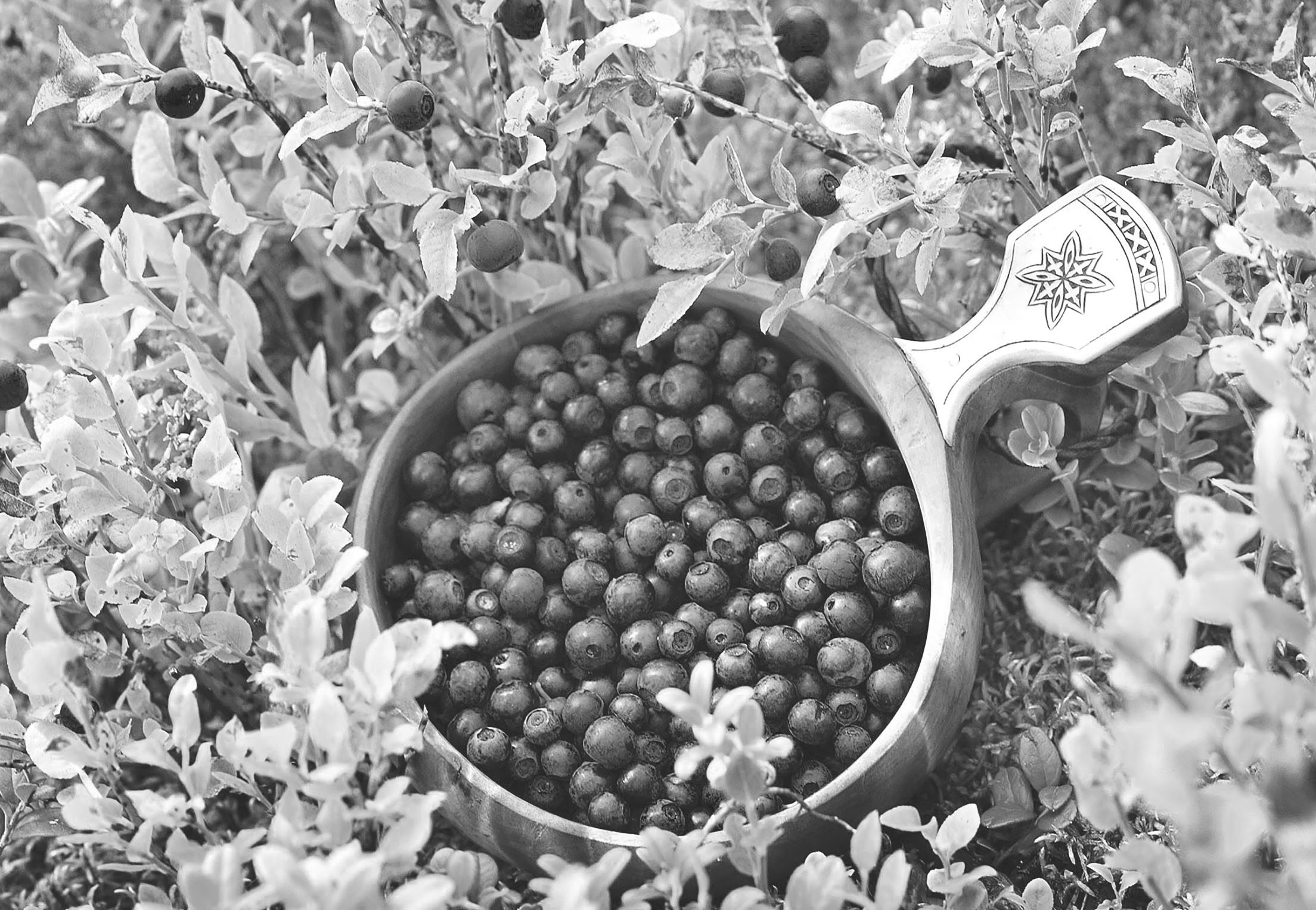
When Americans want to make a blueberry pie, they most likely go to supermarket or health food store, buy the berries and then bake the pie with a blueberry topping or filling — or they might just purchase a ready-made pie. Meanwhile, rural Finns go to their cellars and grab a jar of self-picked and preserved forest blueberries. In the cities, folks rummage their freeze box and most likely find them from there.
It's been a lifelong tradition for Finns to go picking berries in the woods or swamps. The Finnish Every Mans' Rights ordinance allows us to pick berries even in privately owned forests if we don't go too close to others' houses. Besides blueberries, there is a red delicacy called lingonberries, also wild raspberries in certain thickets, and cranberries and exotic cloudberries in the swamps. It is a Finnish hobby to go those places with family or friends equipped with buckets or baskets, coffee in the bottle and perhaps with a mosquito net or repellent.
There have been myriad global lists where Finland is either on top three, or bottom three sometimes. One latest was a ranking of the healthiest countries in the world and Finland was number one (in many others we are at top ten too). The contributing reasons listed were things like sauna and vastas (those bundles of birch we use to beat our skin in hot steam), winter swimming, the cleanest air in developed countries, potable fresh water in every tap, natural foods like forest berries and mushrooms. Furthermore, add being the world's happiest country the ninth year in a row. Well, the latter is partly related to sisu and an unwillingness to concede they are unhappy.
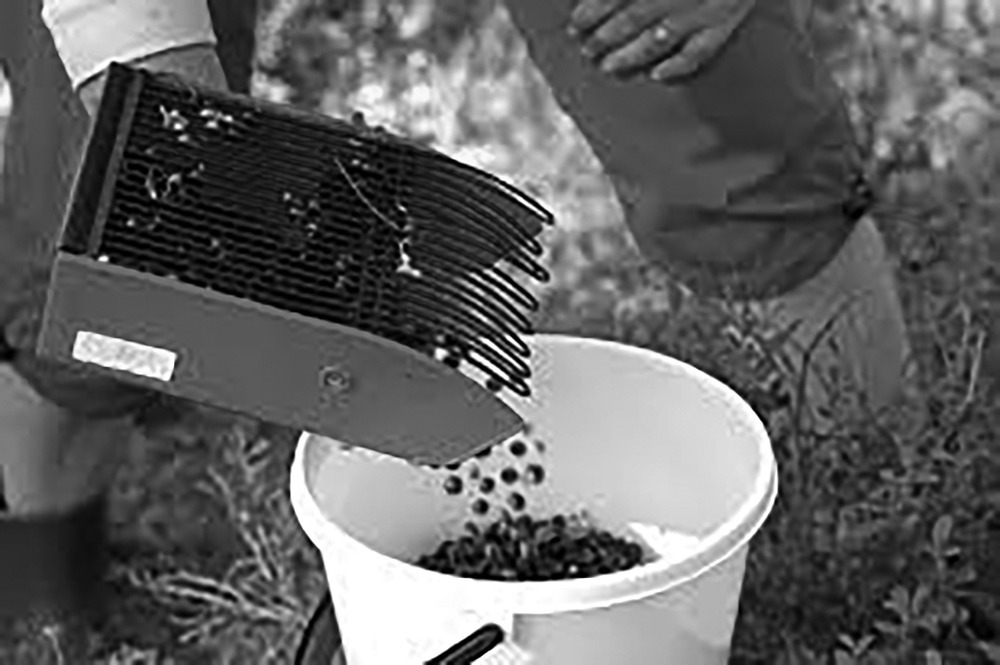
Since all berries and mushroom can be sold tax-free, this has encouraged unemployed and retired people to go to the berry bees. Many diligent people have made a small fortune with gifts of nature. They are not as big as farm-cultivated ones, but they are tastier. Since they are small, they are harvested with the help of special gadgets — berry pickers with metal fingers. In bountiful areas one can pick a two-gallon bucketful in an hour.
However, all this depends on the year. One year there could be a late frost that can destroy the new blueberry inflorescences, another year it is too dry and it withers the small tufts while some rainy summer before the Midsummer will produce big blueberries size of one's pinkie fingernail. Usually the hummocks around swamps are always good spots since they have constant moisture.
It's been estimated that only five percent of all Finnish blueberries are ever harvested. This is due to the locations. Most people populate the southern part of Finland where there are fewer wide blueberry patches. Meanwhile the biggest deposits are in faraway back forests. But in general, most berries grow scattered and to pick them takes lots of time and effort.
The health benefits of blueberries have been known for ages. Even early Finns picked them for their nutrition and taste and multi-purpose use. A usage of sugar helped to preserve them over the winter. In WWII British night flight pilots were fed blueberries to enhance their night vision.
Blueberries contain immunity strengthening flavonoids, anthocyanins, vitamins C and K and minerals like remarkably amounts of manganese. These natural health pills can protect DNA and aid in cognitive functions as well as eye and brain health. Is this the reason Finland has more Mensa members per capita than any other nation?
While countryside housewives are most commonly the people seen picking berries in the forest, this can also be family fun. Even school classes have organized berry picking nature trips to encourage young ones to discover and appreciate what forests can offer. Younger kids might only pick a little cupful, but what's most important is an experience with nature, a healthy snack and adventure. Besides, according to testing, forests produce healthy bacteria for people's well-being.
Finnish forests also invite foreigners to make money for themselves. In the 2000s pickers from Thailand in particular have come in big groups, organized by Finnish wholesalers. They spend whole days in the forests for a few weeks staying together. They might not learn much about Finnish culture but likely learn the hidden secrets of our forests and nature. One lady interviewed by a newspaper had earned enough to support her large family for one full year in her home village.
Finnish cloudberries grow mostly in northern bogs, fens and swamps, but each plant grows alone and thus they are scattered all over. Even though a cloudberry can be a size of a grape, it takes lots of time and effort to pick them. Cloudberries with a very fine taste and rich nutritional value are very coveted delicacies and they can cost $25 a liter (2.1 pints). Some people have made a good living on prized cloudberries and there are them who collect enough to make a trip to a tropical beach every winter with their earnings.
Then there are lingonberries, which mature in the late summer. While blueberries and cloudberries emerge early to mid July and last through August, lingonberry season starts in late August or September. Cloudberries and lingonberries can be found in Alaska and Northern Canada also. Lingonberries are used as jam on pancakes or a piquant addition to salads, and they go well with grated carrots as a nutrition-rich side dish. Another good thing about lingonberries is that they grow in clusters and are faster to collect in bountiful areas.
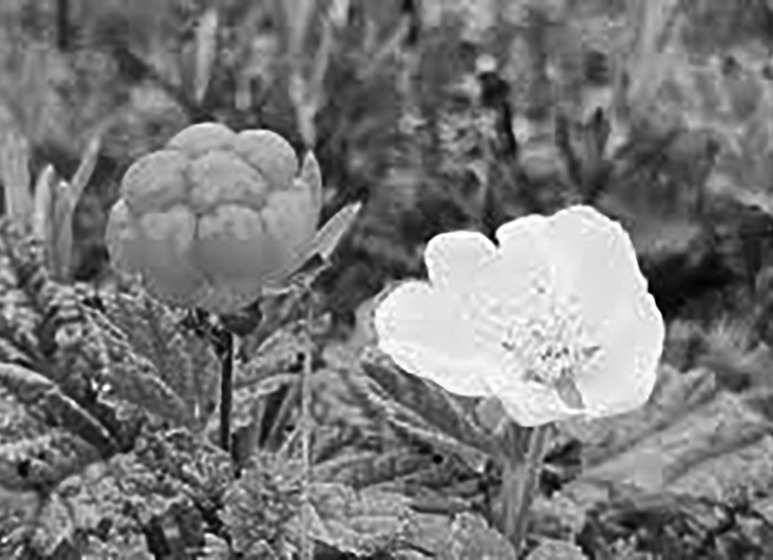
There is one difference in our languages; namely blueberry signifies the color blue, while we Finns call it mustikka referring to black (musta). On the contrary, we are the nation with the most blonds and blue-eyed people on the planet. Cloudberries have many names in Finnish: lakka, suomuurain, hilla depending on the region and lingonberry is called puolukka. None of these have any concrete base word like our blueberry has.
Some of my dearest childhood memories arise from our berry-picking trips with our mother. I don't know how she knew all the little forest roads, trails and fertile glens, swamp rims and moist tufty patches, but even in the poor berry years our jam cellar and freeze box abounded. Usually if one year was bad for blueberries, it was good for raspberries and lingonberries, or vice versa. Add our buckthorn trees and strawberry patch in our home yard, and we were always well supplied.
When young, we kids had an incentive. We were paid 50 pennies or about ten cents for every liter we picked. Even with sibling rivalry, this was excluded, since after a liter or two we got bored and just played around and went discovering the fabulous nature. The highlight always was eating sandwiches and drinking yellow orange soda. In most popular places one might meet other pickers, but the gentlemanly unwritten law is that you don't get within 15 feet of them even if they have hit a real mother lode.
I remember once when I was 15 or 16 and we went picking with my mom and aunt. Over there with her parents I saw the prettiest and most feminine girl of my age. Since we were in the same elongated dell, I could spot her many times and her dainty movements totally distracted me. She made me almost dizzy; I tried to concentrate on my harvesting, but could not.
When we were leaving, I could only have one last longing look at this beautiful forest fairy. Her silhouette and long blond hair are still tattooed on my mind as though it happened a day before yesterday.