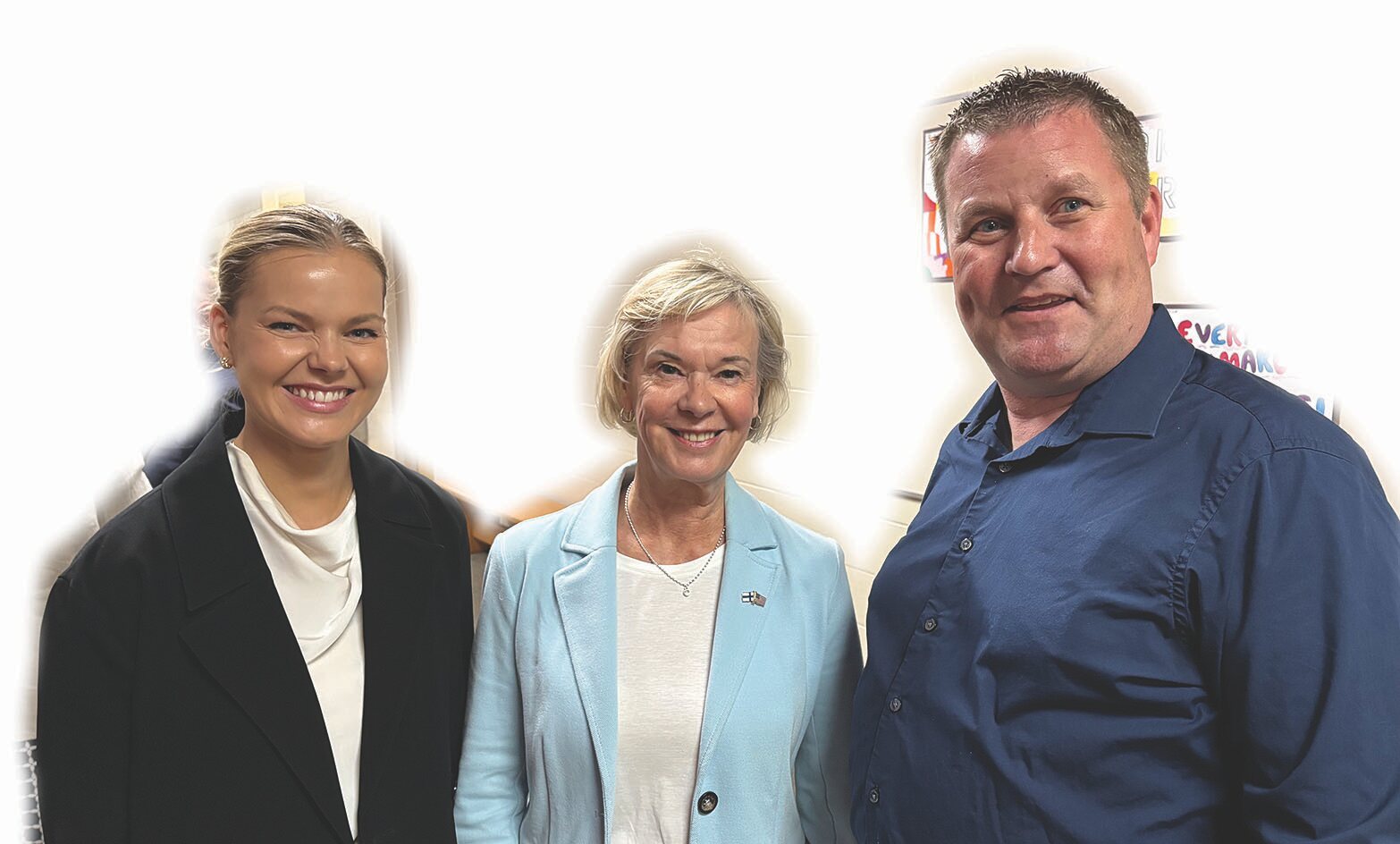
Legend has it that my mother had permanent impressions of my fingerprints embedded in her lower leg because any time I saw someone I knew — or someone I didn’t know — and suspected they might want to talk to me, talk about me, or in any way acknowledge my existence, I’d hide behind mom and cling to the only appendage I could reach.
Yes, I was a shy child; that trait continued into my teen years before slowly but steadily my shell began to crack. Being raised by generations of stereotypical Finns — only speak when spoken to, and only say things that are truly necessary — wasn’t a formula for learning outspokenness, but eventually I discovered that I had a knack for communicating, at least in written form. My degree is in broadcasting, but as the old joke goes I found out that I have a face for radio and a voice for print. So here we are today. I found my place.
Finding that place, and realizing that you can change places as experiences and circumstances dictate, didn’t come easily for an introvert like me. I’m sure my mother, from her perch somewhere in heaven, still can’t believe that the little boy who needed a vice grip on her leg to survive a social interaction was now someone who’s delivered a keynote address at an Independence Day program, and met and interviewed a president, a prime minister, sports superstars and most recently an ambassador.
Yes, mom, I met Ambassador Leena-Kaisa Mikkola (and her trusted aide Riikka) last month, and over a few casual conversations in a variety of settings it was clear that no matter what our roles in this world might be right now, one thing will forever remain true.
People are people.
Ambassador Mikkola is among the most down-to-earth people I’ve ever met, and I’m sure her authenticity and sincere interest in others were among the ingredients that helped her rise to the diplomatic role she currently holds. I didn’t get to meet her because of some appointment made possible by my position in ethnic media. I was simply willing, and so was she.
I suspect this method of being willing, and taking initiative to find one’s place could help to resolve the ever-lingering dilemma faced by Finnish-American organizations across this country — how do we get more people involved?
Maybe we just let them.
If you’ve been contemplating joining the local Finlandia Foundation chapter, or the historical society, or whatever club might be the strongest match for your interests, your skill set and your schedule, just do it. You don’t have to be an expert to be a contributing member. You just need to bring a sincere interest, a willingness to learn and, most importantly, a willingness to share. There’s no such thing as a bad idea — unless that idea isn’t expressed. There’s not a group out there that has too many members. There’s no “one way” to preserve and promote Finnish culture in North America.
Last month, many residents of our small Michigan city learned more about Finno-Ugric culture than they ever expected; a good chunk of those folks didn’t even know what Finno-Ugric meant until our Juhannus celebration. But now they understand, and they have new friends as a result. It happened in Hancock, and it can happen where you are too. Just let go of mom’s leg, open your eyes, your mind — and occasionally your mouth — and see what happens.