By Benn Karne
The Kaleva Hall was itself a spin-off from the original 1908 Finnish Comrades Association Hall on 10th Street in Berkeley. Nine men in 1911 then started the Kaleva mutual aid organization and met for some years at the Comrades Hall. But political divides associated with the Bolshevik revolution in Russia and Finland's subsequent civil war spilled over into the US Finnish communities. The Comrades Hall was too much of a leftist hotbed for some, and the Kaleva Brotherhood enshrined a "no political talk" clause into their bylaws. By the time the Great Depression arrived, the Kaleva group was meeting elsewhere, and then in 1932 built the Kaleva Hall on Chestnut Street in an amazing three months, mostly by member labor. Ongoing unease between the two halls is suggested by the spy-hole in the meeting room door at the Kaleva Hall to allow those inside to monitor those outside during meetings.
Ideology notwithstanding, the old Comrades organization, known colloquially as the "Red" hall, went bankrupt decades ago, and is currently in ownership and operational limbo. In contrast, the Kaleva Hall, now run by the Finnish Heritage Society, is financially successful, and is currently undergoing a $300K remodeling and ADA access project.
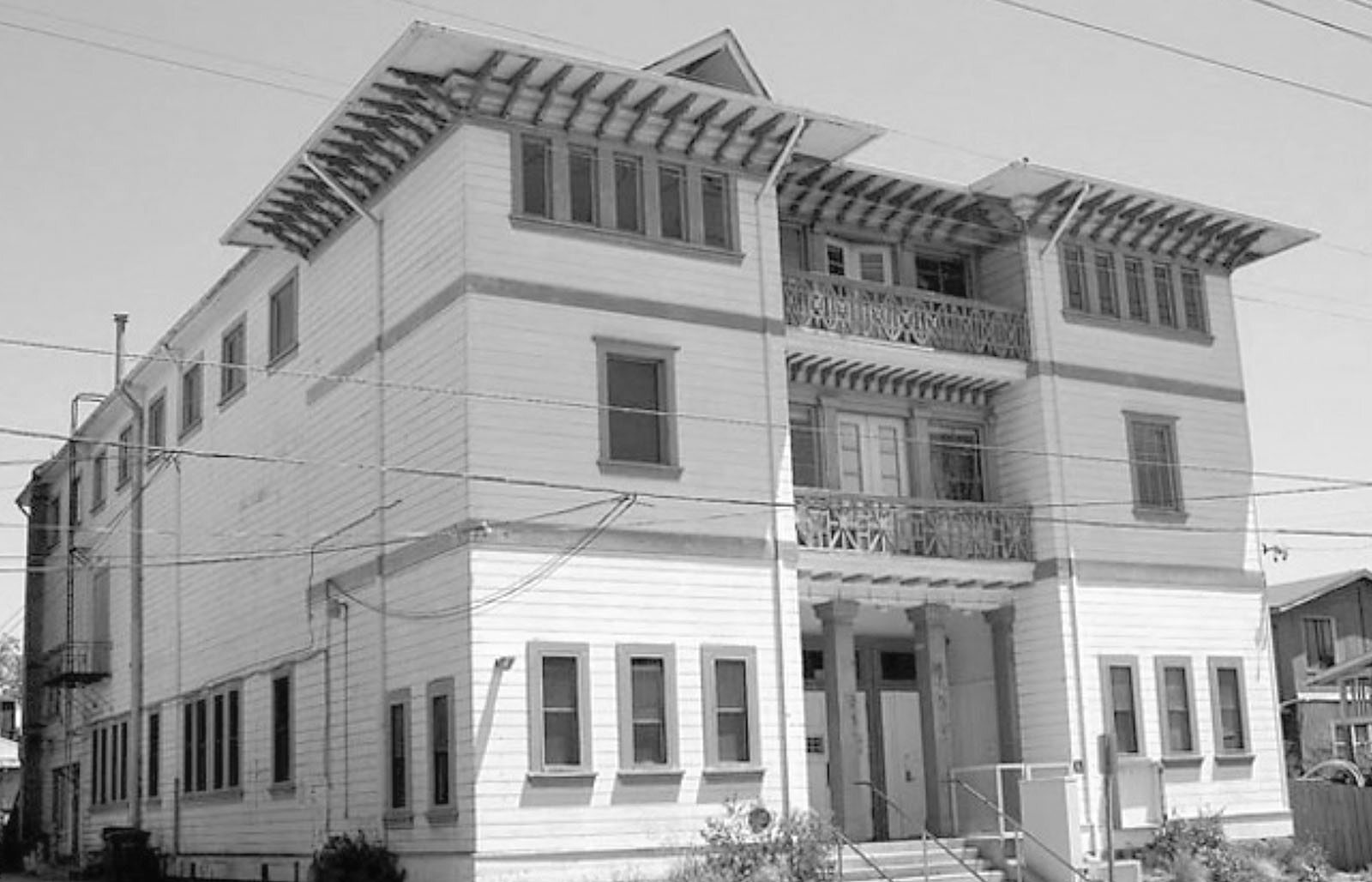
My immigrant grandparents regularly attended events all year at the Kaleva Hall. I made a number of childhood appearances on the stage playing my trumpet at the Pikkujouls.
Early members of the Kaleva Hall were aging by the time the 1960s rolled around, and many were considering where they might want to live out their golden years, possibly with limited resources and/or ill-health.
This was the impetus to found the FAHA organization with the first exploratory meeting held March 1, 1970. The first articles of incorporation were approved in 1971, as well as non-profit status, and within a year a property on River St in Sonoma was purchased for $30K, with 18 members putting up the funds (to be paid back at 6% interest).
It seemed like quick progress towards the goal, which, based on a member survey, was a full-time nursing facility. Indeed, a subsequent agreement was made with one or two existing nursing homes, but only a few members showed any interest. Another setback was when a zoning change forced FAHA's planned senior housing to be moved from the property on West St.
Subsequently the FAHA organizers spent a lot of time and energy considering options and developing plans. The FAHA ladies group raised funds by selling lots of pulla, and holding bazaars, raffles and many other fundraisers. Dozens of properties and proposals were thoroughly considered, including a nursing home, a small apartment complex, as well as building from scratch throughout the greater East and North Bay. There was also a plan to raise $1M from the Finnish community as well as state and federal funds. None of these efforts panned out. After several years, additional effort and funds had been spent on purchase deposits and permits on an El Sobrante site, but that too proved unworkable. Still, the Board exhibited considerable sisu, and pressed on. Then, in early 1977, another possibility arose.
The old El Verano Inn was associated with gangsters during Prohibition when it was named Parente Villa. The building on the left is Parente Villa, and I believe Paul's Resort is the building on the right, which became Paul's Field in more recent times, and currently is the construction zone next door. The Villa was later sold and became Rosario's Resort, and finally the El Verano Inn, which had fallen on hard times by the 70's, and was available for $157K. It seemed like the right property, already had a pool, and was enthusiastically purchased. Meanwhile the first Sonoma property was sold for a handsome profit, paying off the initial investors and having some left over. The plan was to renovate the old hotel into 9 living units at a cost of $500K, then expand to 100+ units as funds became available. Initial funding would come from an offering of $400K (later increased to $1M) worth of 7% 15-year notes to be purchased by the greater Finnish community. Several hundred reportedly attended a FAHA picnic to see the undeveloped El Verano site and contribute funds. Our founders thought big, and more importantly had the sisu to persevere!
Full time caretakers were on site by mid-1978, and the Inn rooms were being occasionally used by members. (Is there anyone here who actually stayed in those rooms?)
Serious repairs to the Inn were necessary, in particular the roof, but Sonoma had offered a $40K grant to make repairs.
As is the Finnish way, saunas were a high priority, and by the end of 1979, the sauna building had been completed by fundraising the $17K in materials cost and using volunteer labor.
But for the housing project, numerous delays resulted from government and loan officials’ objections, including that three floors high was excessive and even that the project was “above modest” and needed to be built at a lower quality level (which the Board wisely declined to do). Each of these delays and objections necessitated expensive re-designs and new drawing packages. Newsletters of that period included Board comments such as “one frustration after another,” “agonizingly slow", and “extremely frustrating”. And by late 1980 it was also determined that the structural, plumbing, and electrical repairs required on the old Inn would not be cost effective. Frustrations were multiplied when re-designs then required revisions to county use, planning, and building permits as well. Still, the FAHA Board pressed on, and the hundreds of members kept the faith and kept contributing in toil and treasure. (One newsletter noted over 100 donations in honor of various members’ birthdays! That’s a tradition we need to re-establish!)
FAHA finally got a HUD loan of almost $2M at 9.25% to construct the current 48-unit Manor, with groundbreaking at Juhannus 1981. Over 11 years of dogged effort had been required to turn the original vision into a much-modified but successful reality! That’s sisu! We owe a tremendous debt to FAHA’s founding members for what we enjoy today.
The HUD loan requirements dictated a division of the property into two parcels, run by two separate Boards, which we had for many years. Tenants moved into the Manor beginning in April 1982.
By then the Board was already considering how to build a multi-purpose Hall (with an estimated cost of $350K), and construction was largely completed a year later, at which point FAHA had over $200K in the bank, largely from individual and organizational contributions including the Finnish government.
And within another year it was decided to build the extension to the Hall including the manager’s apartment, the guest units, the lounge area, and, my favorite, the bar. The year 1985 saw the dressing rooms adjoining the saunas completed. The Palms limited equity co-op apartments were in process, built on the site of the demolished old Inn, and being offered for $78K each, with construction completed in 1986. The Palms leases its land from FAHA, but is self-governing.
By mid-1989 the children’s play area had been installed, and 20 years later the Gazebo was built, completing the current build-out of the campus.
Meanwhile, interest continued for a nursing facility. The off-campus Hoiva-Koti was completed by February 2000, with 6 beds and a 24-hour attendant.
Costs started at $3,100 per month, and as of 2002 the operation was about break-even financially. Unfortunately it was not deemed sustainable, and the property was sold in 2004.
A gradual reduction in membership contributions and increased expenses lead FAHA’s Board to look for other income sources, resulting in purchase of the Arbor properties’ four duplexes, across the creek a quarter mile or so, and those are still providing significant market rate rental income today.
A decade ago FAHA’s then-Board demonstrated its sisu when we uncovered and dealt with embezzlement by the then-Executive Director. It was an extremely stressful situation, but again, the heart of FAHA persevered, and we are now in good financial shape, with responsible people in oversight positions.
For a while, FAHA could bask in the period when buildings were new and regulations were fewer. Forty plus years later, maintenance as well as financial and organizational issues have come to the fore. Once the HUD loan was paid off, there was no longer a need for two separate organizations and boards, and as of 2024 we have been a single non-profit entity again. As you’ve heard, we’ve now partnered with CCH to manage day-to-day operations at FAHA. I anticipate we can look forward to many more years of a successful, fun, and engaging FAHA.
Author’s note: My sources included the Berkeley Kaleva Hall website, Richard Hourula’s excellent 2025 talk on Berkeley’s Finn Town, the El Verano Historical Society website, and FAHA’s library archives and newsletters (with help from Kristina Gale, Brett Evans, and Ann Ratilainen).