By Kip Peltoniemi
Hei, ystävät! (Hi friends!) I will be writing articles about Finnish traditional music for the Finnish American Reporter, but first I want to tell you where I am from and my musical background.
To me, as a child, the word “Finn” meant the farming people in New York Mills, 13 miles to the west from where I grew up in Wadena in west-central Minnesota. In his 1923 book “Amerikan Suomalaisten Historia II Ja Elämäkertoja” (Finnish-American History II and Biographies), Salomon Ilmonen called New York Mills and the surrounding area “Laajimpia yhtenäisiä suomalaisasutuksia Amerikassa” (the longest, continuous Finnish settlement in America). No doubt, Duluth, the Iron Range, and Copper Country towns had more Finns within their populations of mixed nationalities, but New York Mills was nearly homogeneous back then and could accurately be termed “a Finnish settlement.” There were earlier settlements of Finns in southern Minnesota, but, perhaps, Ilmonen did not consider these towns to be Finnish to the same degree. I don’t know if he was right, but, at the least, “Mills” became thick with Finns after Tuomas Autio walked 60 miles down the Northern Pacific track from Brainerd in 1874 and marked his homestead.
In its early years, Mills functioned as the pääkaupunki (main town) for kylät, outlying villages and townships, three of which, Sebeka, Menahga, and Wolf Lake (Susijärvi), grew into towns themselves. Topelius, Runeborg, and Snellman, despite their highbrow names, were villages that faded away. Ilmonen claimed that the early Mills settlers were a different breed, and that people of the 1920s could not do what they did. The immigrants certainly had inducements to succeed, having known poverty and even starvation in Finland in the 1860s. Some, fleeing hunger, first worked in the mines of Finnmark, Norway, before being recruited to the underground mines in the Upper Peninsula of Michigan. When miners heard about available homestead land in west-central Minnesota, the migrants grabbed the opportunity. The Mills area at that time was densely wooded, like Finland, and was perhaps even colder in winter. The Finns already had the skills needed to survive there and open farmland, although it was a life of nonending work, at first.
Much of what I know about local history I have learned through talking to people in casual conversations. If a person lives long enough, and remembers a little, there still is a story to tell. While I have read histories of Finnish-America and Finland, I am more interested in personal, local stories. In 1959, when I was 8, New York Mills published a 75th anniversary history book that included biographies and photographs of the immigrants, including my relatives. This book led me to start asking questions of local Finns, and I haven't quit, yet.
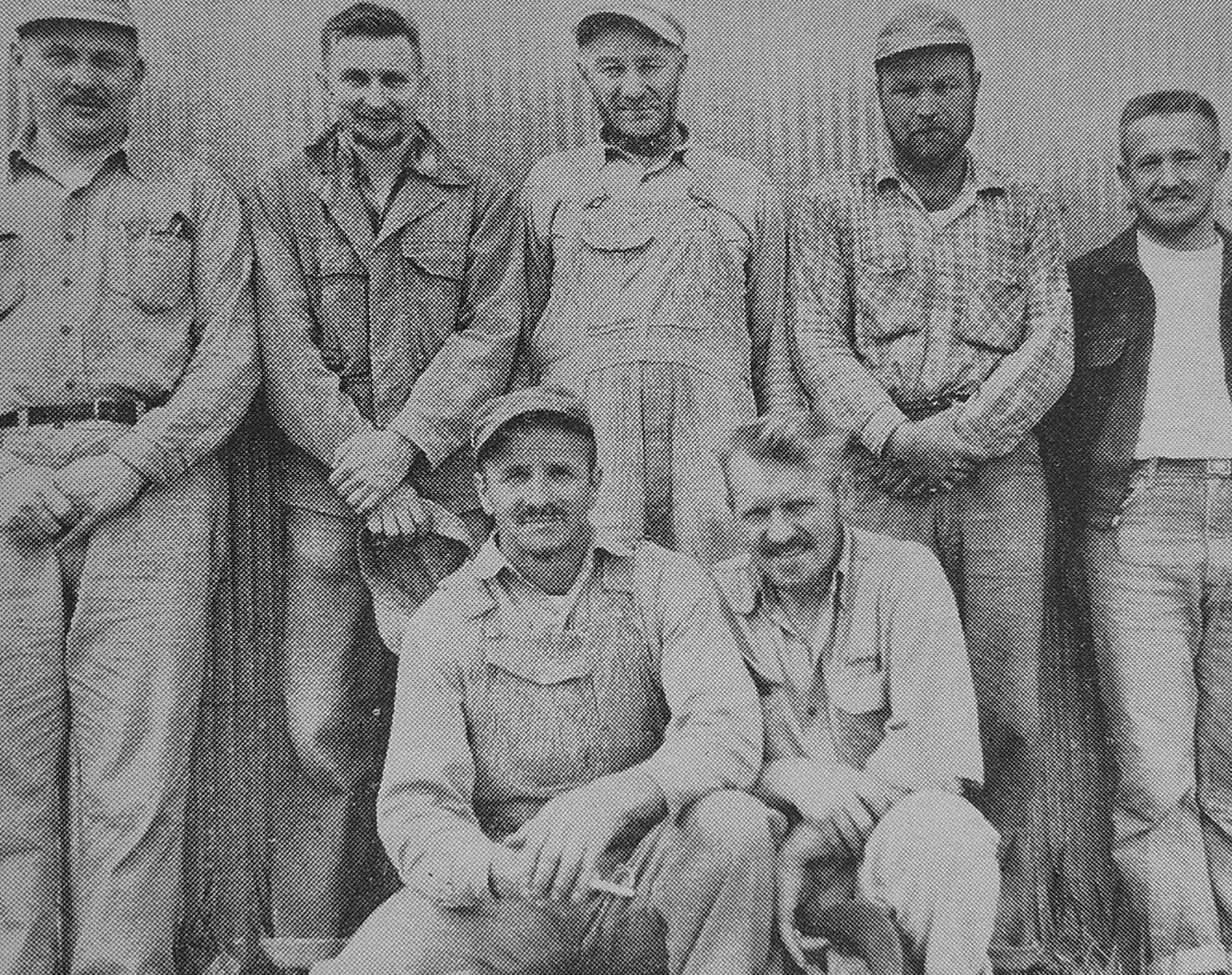
Into the 1950s and 1960s, the Finnish language was still spoken on street corners, in churches, at the bank, and in stores. We often visited my grandparents' dairy farm, just outside of Mills. I feel fortunate to have known my grandparents, who were born in the 1890s, and who experienced farm life in the late 19th century. There were still Finns who didn't speak English, at all, and even a few baby-boomers who arrived at kindergarten only speaking “Finn.” Businesses had at least one person on staff who could speak Finnish. Many businesses were jointly owned by the patrons, such as the co-op creamery, co-op elevator, co-op insurance agency, co-op general store, co-op garage, co-op petroleum service, and the co-op locker plant. Co-ops were typical enterprises in Finnish farm towns, not only in Minnesota, but also in the Dakotas and elsewhere. Less typically, New York Mills published a national newspaper in Finnish, the “Amerikan Uutiset” (American News), as well as several other Finnish publications over the years. The paper moved to Florida in 1980, and the co-ops have either ceased operation or have been absorbed by a larger regional co-op.
Mills was a collection point and service center for dairy farms. The farmsteads were small, neat, and bucolic, unlike the biohazard, mega-dairy, cow cities of today. My grandparents milked (by hand) 12 Jerseys, had a bull, a pig, a large chicken coop, and a big garden. The cows all had names. Old Fox was the boss cow. I was not on a first-name basis with the bull, but he was as surprised as me when I accidentally ran out a barn door into his pen. Jersey bulls are fast, and although he would have been happy to assist, I cleared the fence without his help. Field crops were corn for sileage, oats for cattle feed and bedding, alfalfa and meadow grass for hay. Finns tended towards self-built, small houses, barns, and sheds, plus an outdoor sauna, of course. As a town kid, my experiences on my grandparents’ farm were limited and easy in comparison to farm kids who milked and did chores daily. I did bale both hay and straw, though. I never did learn to milk by hand.
Today, the Finnish language in New York Mills is virtually extinct. The surrounding landscape is becoming much different, too. The dairy farms have mostly been replaced by large fields of soybeans, corn, wheat and oats. On plots that once held two or more farmsteads in groves, there are now massive, open fields without wind erosion protection. Other than a planted monoculture, flora and fauna are non grata in this style of farming. Small farms were divided by fence lines and woods, where shrubs, wildflowers, and grasses provided habitat for animals. On the plus side, there are grass-fed beef cattle out in pastures, and, thankfully, some farmers still practice conservation. Most small farmers are just trying to survive, doing the best they can, given today’s costs and markets. What in the world would we do without them?
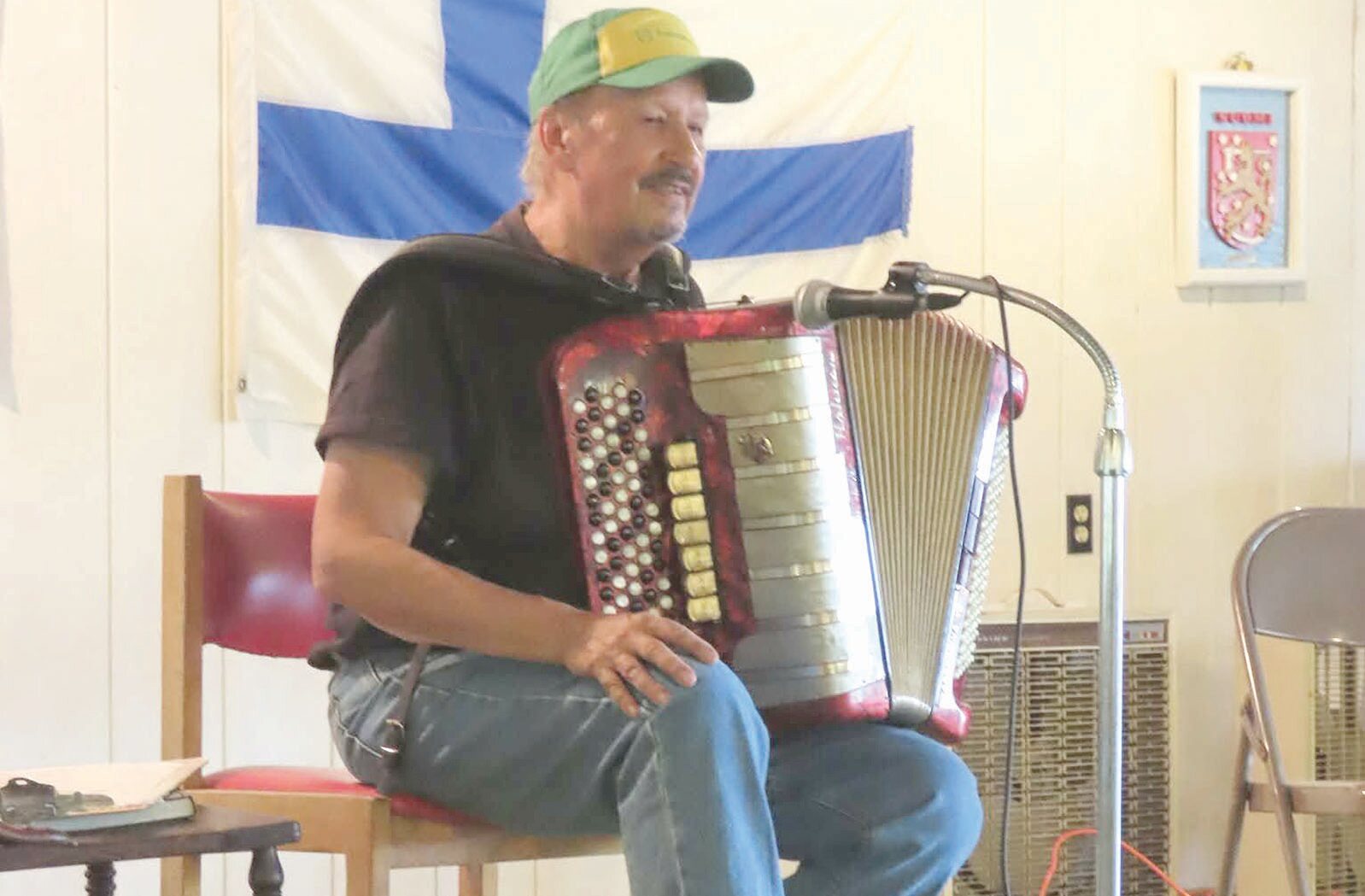
Throughout my work life I have always played music on the side, since I never wanted to be a professional musician and be obliged to play music and be on the road. I have played guitar, bass, and button accordion, but in the 1970s, I was robbed of all my instruments, except the accordion. That turned out to be a good thing, as I began to focus on getting better at the accordion and writing my own tunes.
In 1991, two visiting Finnish musicians, Kimmo Pohjonen and Arto Järvelä, and three folk music researchers — Hannu Saha, Simo Westerholm, and Ilkka Kolehmainen — crowded into my kitchen in Minneapolis to listen to me play. They had been travelling throughout the Upper Midwest, listening to Finnish-American musicians, of which I was one of many. Kimmo and Arto liked my instrumentals and songs and recorded several of them in Finland. The kitchen session also led to trips to Finland to teach my accordion style in Kaustinen, and later, on two occasions, at the Folk Music Department at Sibelius Academy in Helsinki.
I became friends with many musicians at the Academy and in Kaustinen. In 1999, I was able to convince 17 of them to play in various combinations on my CD, “Minnesota Tango.” It was produced by Arto and we recorded in three studios in Finland. When done with recording, I still had to find money to get it mastered, but finally I did, and a Finnish label, Texicalli, put it out in 2002. The Helsingin Sanomat called it the folk recording of the year, which pleasantly stunned me. While the CD is long sold out, you can hear it on YouTube. My early exposure to Finns helped me interact with the musicians I met in Finland, and without it, none of this would have happened.
In May 2025, I was fortunate to receive an American Scandinavian Foundation fellowship. I researched music in Kaustinen and the Finnish music of Norrbotten, Sweden, and came back with a massive archive that will keep me busy curating for years. My mission is to disseminate what I have learned, of which this article and subsequent articles will be a part. I will include sheet music with some of the articles and suggestions for where readers can find examples on YouTube. Moi moi!